I'm a Christian woman, happily married to my best friend, Neal. We have 3 grown sons, Gary, Dale, and Carl, 3 sweet daughters-in-law, Chelsea, Janelle, and Emily, and 5 grandchildren, Rich, Jude, Amara, Jed, and Atlas! Neal preaches for the Cumberland Trace church of Christ in Bowling Green, KY. We love the Lord and His church!
The beautiful account of the Prodigal Son returning home always touches my heart. But Luke fifteen’s account of the wayward isn’t the only type of return God wants. I don’t know if “return” is a key word in Luke, but it appears 21 times in that gospel of the 35 times it’s found in the entire New Testament. Notice the ones who returned:
His twelve apostles. Jesus “sent them to preach the kingdom of God and to heal the sick.” They “departed and went through the towns, preaching the gospel and healing everywhere.” Then “the apostles, when they had returned, told Him all that they had done” (9:2,6,10).
The seventy. Jesus “sent them two by two before His face into every city and place where He Himself was about to go.” He sent them into the cities to heal the sick and preach about the kingdom of God. “Then the seventy returned with joy” (10:1,9,17).
The grateful Samaritan. Jesus healed ten lepers. “And one of them, when he saw that he was healed, returned, and with a loud voice glorified God, and fell down on his face at His feet, giving Him thanks.” Jesus expressed disappointment in the other nine who didn’t return (17:11-19).
The women who followed. They followed Him to the cross. They followed Him to the grave. “Then they returned and prepared spices and fragrant oils.” After the wonderful discovery of the empty grave, “they returned from the tomb and told all these things to the eleven and to all the rest” (23:27, 55, 56; 24:1-10).
The two on the road to Emmaus. They were discussing the empty tomb. Jesus appeared to them, but they didn’t recognize Him. He preached to them and stayed with them. “And they said to one another, ‘Did not our heart burn within us while He talked with us on the road, and while He opened the Scriptures to us?’ So they rose up that very hour and returned to Jerusalem” and “they told about the things that had happened on the road, and how He was known to them…” (24:13-35).
Jesus. After being filled with the Holy Spirit, He returned to face the tempter (4:1,2). After forty days of temptation, He “returned in the power of the Spirit to Galilee” (4:13,14). He always returned to the multitudes, even when exhausted, grieving, or facing death.
Everyday, we make the choice whether or not to return to Jesus. When completing one task for Him, will we, like the apostles and the seventy, return to seek another? Will we return to Him with thanksgiving for our salvation and our daily blessings? Will we return to tell others what He has done for us? Will we return to Him even when weary, when it’s inconvenient, when we’re caught up in our own sorrows? The original Greek word for “return” also means “be again” (Louw-Nida). It’s a brand new day…will I be His again?
Final words of the gospel of Luke: “And they worshipped Him, and returned to Jerusalem with great joy, and were continually in the temple praising and blessing God. Amen” (24:52,53).
Prayer for Today: If I am not returning to You, I am wandering away. Help me, Lord, return to You each and every day.
My brother-in-law has a birthday today. I’m attending a funeral this morning. Birthdays and funerals always make me more aware of the passing of time. The older I get, the more quickly time passes somehow. I once heard “time” defined as “the period between two eternities.” Life is brief. The Bible compares the shortness of life to a shadow (1 Chronicles 29:15), a cloud (Job 7:9), a flower (Job 14:1,2), a vapor (James 4:14), a sigh (Psalm 90:9), grass (1 Peter 1:24), and a breath (Job 7:7). Standing before Christ, each of us will give an account for our brief time here on earth. So how can we make the most of our time for God?
Focus on Our Treasures. What do we treasure? Certainly we know what the answer to that should be. But what if strangers were asked to answer that question for us? How would they go about finding the answer? They would watch where we spend our time, energy, and money. These three things are dedicated to what we treasure. Jesus told us to lay up for ourselves treasures in heaven, “for where your treasure is, there your heart will be also” (Matthew 6:19,20). In other words, our priorities must be spiritual, heaven-minded. How can we make sure we’re laying up treasures in heaven? We must put the kingdom of God first (Matthew 6:33). We must love the Savior more than our own family (Matthew 10:37). We must love Him more than we love ourselves (Matthew 10:39).
Focus on Our Influence. The scope of our influence is broader than we think. People all around us are watching us walk, talk, and shine the Light. What is my role in my Christian family? What can I do? Paul told some Christians that the way they received the Word with joy became an example to other Christians around them. He said, “For from you the word of the Lord has sounded forth…Your faith toward God has gone out, so that we do not need to say anything” (1 Thessalonians 1:6-8). The influence of these Christians saved Paul, Silas, and Timothy some work. Are we saving anybody some work? Perhaps the elders? Some teachers who need a break? The minister of personal evangelism? Our influence can make a difference in the kingdom!
Focus on Our Mission. “For I know the plans I have for you, says the Lord, plans for good and not for evil, to give you a future and a hope” (Jeremiah 29:11). Jeremiah sent these words in a letter to Jews who were in captivity in Babylon. They weren’t where they wanted to be. They certainly weren’t where they planned to be. Jeremiah was reminding them that God had a plan for them, a purpose. Some of us are happy and content. Some of us aren’t where we had hoped to be at this point in our life. Jeremiah gave the Jews a two-part program: prepare for the plan and pursue perfection. No matter where we are in life, we must keep ready for action. We must keep ourselves in spiritual shape for the mission God has for us. We mustn’t wait for a better time! Henry David Thorough said, “As if you could kill time without injuring eternity.” The only way to tell the difference between wasting time and investing time is to know our purpose, our mission. What if you’re not sure what it is? Christians can all adopt the two missions of Jesus. He came “to do the will of the Father” (John 6:38) and “to seek and save that which was lost” (Luke 19:10).
Focus on Our Eternity. Now is the time to build our faith, strengthen our foundation, and put on the whole armor of God. We can make the most of our time by challenging ourselves to obtain the high mark Jesus set before us (Philippians 3:12-14). Paul challenges all of us with several charges in Philippians. Develop the mind of Christ (2:5-8). Serve without complaining (2:14,15). Find our joy in the Lord (4:4). Don’t worry about anything, but pray about everything (4:6). Meditate on holy things (4:8). And be content with God’s help (4:11-13). These are six different things. We can take focus on one each week and see if we can tell a big difference at the end of six weeks. If we practice all of these things, we’ll become Christ-like, humble, content, happy, calm, filled with the glow of purity. We will be prepared for eternity.
Am I satisfied that I am making the most of my time for God? Not really. But I can pray for wisdom so I can discern where God wants me to be and what He wants me to be doing right now. Finding out if I am making the most of my time is not going to happen by accident. Am I focusing on my treasures (making God my top priority)? Am I focusing on my influence (are my actions leading others to Christ)? Am I focusing on my mission (looking for ways to serve now instead of waiting for the right time)? And am I focusing on eternity (weighing everything against the ultimate goal of Heaven)?
Prayer for Today: Thank you for each new day, Lord. May I recognize it as a gift and make the most of my time for You.
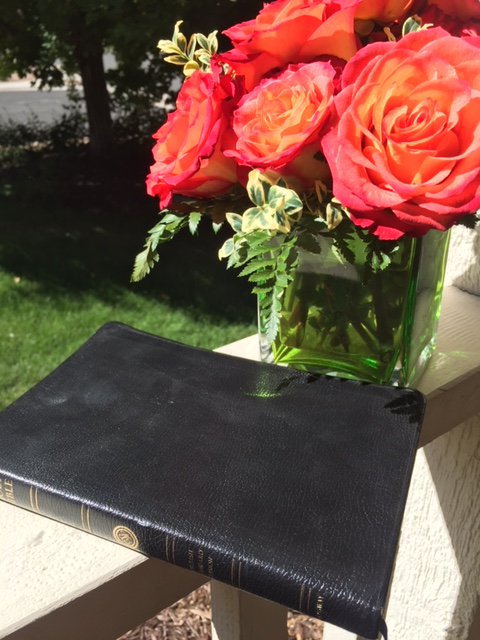
Let’s counter the overwhelming influence of worldliness by making our Bibles have more of a presence in our communities. We’re all very aware of the moral decline in our nation, and the reason we’re so aware of it is because we see it everywhere we turn. It’s on the news, radio, TV shows, talk shows, magazines, billboards, and internet. What’s trending? Worldliness. All of these media outlets and various other avenues touting materialism, secularism, and godlessness can be discouraging. Satan must be pleased. He wants us to despair, to ask, “Where are the Christians?” He wants us to throw our hands up and quit. I think we can do something about that. We can remind everyone that there are still many who want to serve God. And we can do that by the very simple act of making our Bibles more visible.
Bibles are recognizable. Everyone knows what they look like. Outside of the church building, we don’t see them very often. If we do, it’s notable. The few times I’ve seen someone with their Bible on a plane or in an office, I think, “Hey, they’re holding a Bible!” And it always makes me smile. So what if we ALL carry our Bibles with us, in a very visible way, everywhere we go? The next time we meet friends for lunch, we can call and ask each one to bring their Bible, and then just set them on the table. The Bibles won’t go unnoticed. If we’re shopping, the Bible can rest in the seat of the cart. If we’re carpooling, we can display it in the dash. If we’re at the gym, we can put in on the treadmill. If we’re in the bleachers, we can set it right next to us. Whether we’re working, playing, traveling, networking, or relaxing, we can look for ways to allow our Bibles to have a presence. (This means it’ll have to be a traditional Bible, as the ones on our phones or other devices won’t be easily recognized by others.) Even though such a simple act doesn’t involve extra time or money on our part, I think this kind of Bible-saturation can make an impact.
What’s the worst that can happen? Someone might ridicule us. Someone might be offended. Someone might even ask us to put the Bible away.
What’s the potential for good? At the very least, our Bibles will be noticed. People around us will automatically know we are believers. Other godly folks will be encouraged. The nonstop message of immorality will be partially countered by the presence of Bible believers. Others might start carrying their Bibles, too. Who knows? It might even become commonplace in your community to see Bibles out in public. And one day, someone might even be interested in studying that Bible with you.
“You are the light of the world. A city that is set on a hill cannot be hidden. Nor do they light a lamp and put it under a basket, but on a lampstand, and it gives light to all who are in the house. Let your light so shine before men, that they may see your good works and glorify your Father in heaven” (Matthew 5:14-16).
Prayer for Today: May I never be ashamed of Your Word, O Lord.
I’ve been thinking about the great Bible class we had Sunday morning taught by Will Hanstein. The discussion centered around the warning Jesus gives about not causing others to stumble (Luke 17:1,2). Mr. Hanstein pointed out that our actions and words can influence whether or not others go to Heaven. He then said that Jesus tells us in the very next verse how to keep from causing others to stumble: “Be on your guard! If your brother sins, rebuke him; and if he repents, forgive him” (Luke 17:3). Mr. Hanstein challenged us to consider how we’re doing with this difficult command. It occurred to me that there’s one significant thing that would make this command easier for all of us, and that is having genuine relationships. If we really know each other, rebuking and forgiving are powerful and effective. If we don’t really know each other, we risk abusing the very safeguard Jesus put in place for His “little ones.”
If I don’t really know you, I won’t care enough to rebuke you. Why should I? It’s none of my business how you choose to live your life. Right? We don’t feel this way at all when one we dearly love is in trouble spiritually. It takes courage to confront someone who’s entangled in sin. But if we care about them, we’re more willing to do it, no matter how painful.
If I don’t really know you, I might misjudge you. I might feel the need to admonish you for something because I assigned motives that weren’t really there. Yet when we know and care about others, we will give them the benefit of the doubt instead of assuming the worst.
If I don’t really know you, a rebuke from me may appear self-righteous rather than loving, no matter how valid. If we hardly ever talk to someone, naturally they will not welcome any sudden interest in their spiritual welfare.
If I do know you, I will humbly rebuke you in a timely manner. I won’t wait until it’s too late. (As Mr. Hanstein pointed out, a rebuke is needed when someone is caught up in sin and not doing anything about it, not when someone is aware of their sin and trying to change.) When we know and care about others, we won’t put off talking to them, lest they ask, “Why come to me now, after all this time?”
If I do know you, I will be eager to forgive. Like the father of the prodigal son, we rush to welcome back with open arms those we care about. If we don’t really know someone, we may not be as diligent in reassuring them of our joy and love.
Genuine relationships spell the difference in how we handle Luke 17:3. It will keep us from abusing the command (being too eager to rebuke because we see the worst in others), and it will help us carry out the command (being motivated by love to humbly rebuke and forgive those who need it). There may be Christian brothers and sisters who sit on the other side of the auditorium that we don’t know very well. Let’s build genuine relationships so we can give (and receive) what Jesus put in place as safeguards for our souls.
Prayer for Today: Help me, Lord, to care enough to get to know and love my Christian family.
There may be times when you’re not thrilled with your spouse or your marriage. Do you feel like you’re not communicating well? Do you feel like you’re the only one who really cares enough to make an effort? Or perhaps you feel like the only spark left in your marriage is the kind that comes from friction. While your feelings may be valid, your marriage is worth a little self-examination. Particularly, why are you now viewing your relationship unfavorably? Why are you frustrated? It could be that you have more control over the way you see your marriage than you think.
Your marriage is better than you think when you ignore the busybodies. “A whisperer separates the best of friends” (Prov. 16:28). Who is telling you your marriage isn’t good enough? There are some who seem to enjoy sowing seeds of discontentment. They plant doubts in the minds of those who are married, creating problems where none existed before. Your own parents or siblings can do this by making negative remarks about your marriage. Have they ever questioned the actions of your spouse? Coworkers and friends might make comments like, “I don’t know how you put up with that. I know I wouldn’t!” Some comments are veiled criticisms. “Would you like me to replace that light switch? I know your husband’s not much of a handyman.” Next thing you know, you start noticing that there are a lot of things around the house your husband has neglected to fix. You may have been content before, but now you’re more aware of all the annoying things your spouse does. And you’re embarrassed that someone else had to point it out! Sometimes your friends don’t have to say anything. All they have to do is raise their eyebrows a little and suddenly, you resent your spouse. The truth of the matter is we are easily influenced by the opinions of those around us. Thoughtless remarks that hint that our spouse is inconsiderate, lazy, stingy, or clueless can be taken to heart if we’re not careful. Only listen to things that promote your spouse, even by family members. “There is one who speaks like the piercings of a sword, but the tongue of the wise promotes health” (Prov. 12:18). Your wise friends and family members, the ones who are worth listening to, will say things that build up your marriage, not tear it down.
Your marriage is better than you think when you embrace your differences. You may have heard the story about the little girl who said to her younger brother, “Why don’t you ever admit that I’m right?” Her brother answered, “You always think you’re right.” The girl said, “Well, I always AM right.” The boy said, “Ha!,” and walked off, muttering under his breath, “Some day I’m gonna get married to get away from all these arguments.” One of the most popular official reasons for divorce is “irreconcilable differences.” In her book The Challenge of Being a Wife, Ruth Hazelton has a chapter entitled “How to Stay Friends even though Married.” She wrote, “Perhaps the biggest problem of all is the fact that he is a man and she is a woman.” Chances are, you didn’t marry someone exactly like yourself. You think you need to be stricter with the kids and your spouse thinks you need to be more understanding. Your ideal vacation involves a spa hotel and outlet malls, while your spouse would prefer tent camping in the wilderness. You want to wind down listening to the Marriage of Figaro, but your spouse is blaring Led Zeppelin. Sometimes you wonder how on earth you ended up together. You’re so different! You don’t get him, and he certainly doesn’t get you. Dr. Harley, creator of the website “Marriage Builders,” said, “Couples are usually most compatible on the day of their marriage, and things go downhill from there. Why? Prior to the marriage, they make great effort to be compatible. They try to understand each other’s likes and dislikes and then try to accommodate those feelings. They are more willing to change their behavior to become more compatible. Trouble is, once the marriage takes place….mission accomplished! Now they are married, so they can focus on other things—careers, children, etc.” You’ve probably seen a young woman out to impress her man. She grins all the way down the aisle as a beautiful bride. And then she waits to be impressed. Before long she tearfully announces that she is disappointed. Her man does not impress her as a husband. He does not impress her as a father. Did he really change, or did her mindset? Perhaps your marriage seems less than ideal because you’re no longer trying to impress. You’re no longer trying to accommodate. Remember what used to motivate you to put all that effort into being compatible–you WANTED your spouse, differences and all. View those differences once again as attractive traits that complete you.
Your marriage is better than you think when you want to make your spouse happy. Instead of allowing disagreements to make you disagreeable, you can enhance your marriage in such a way that both of you come out on top. “Let nothing be done through selfish ambition, or conceit, but in lowliness of mind let each esteem others better than himself. Let each of you look out not only for his own interests, but also for the interests of others” (Phil. 2:3,4). God’s advice is for us to have a new mindset, different from the selfish society in which we live. Marriage isn’t about how your spouse can make you happier, it’s about how you can make him/ her happier. Wanting your spouse’s happiness means you don’t have to have the final say in every disagreement. Instead, let God have the final say. Wanting your spouse’s happiness means instead of criticizing, you daily look for ways to verbally admire and appreciate. Wanting your spouse’s happiness means instead of taking him/ her for granted, you’ll cherish each day as a gift from God, thanking Him for the blessing of your marriage. You won’t want your spouse’s happiness if you don’t have a Christ-like mindset. If you are caught up in your own desires and expectations, your selfish heart will be blinded to your spouse’s needs. As always, God knows what is best for us. Trusting Him means putting your spouse’s happiness before your own. You’ll be thrilled when you notice that you end up being the one to find so much more joy in your marriage.
Prayer for Today: By emulating Your Son, Lord, may we show the world what it really means to have “a marriage made in heaven.”
In 2011, I was given an assignment to interview a Christian parent. Having three sons myself, Sister Butt seemed an ideal candidate. Stan and Sheila Butt have brought up three sons in the training and admonition of the Lord (Eph. 6:4). She graciously allowed me to share this interview here on my blog. It is encouraging to see a mother who has successfully raised boys to grow into faithful men, active in the Lord’s church. All three of her sons preach the gospel!
*Besides your spouse and the Almighty, who was the most helpful to you as you trained your children spiritually? In what ways?
The body of Christ had the greatest influence on our children. When Stan Jr. was in law school at Emory University, he wrote an article describing the church’s influence on his life. He said the church made him a stronger person. We often had Bible teachers, preachers, and missionaries into our home whom we greatly credit as having influenced the spiritual growth of our children.
*Were there any book or articles you read that were a help?
Next to the Bible, I enjoyed Dr. Dobson’s book “Hide or Seek.” This book describes the importance of building a child’s self-esteem. However, I soon realized that it is more important for a child to have “Christ-esteem.” For a child to say, “I can do anything” is one thing; for a child to say, “I can do all things through Christ who strengthens me” is quite another. That child will have the proper respect for God and will also develop humility and compassion. Many children with high self-esteem will never develop those characteristics.
*Did you have any specific technique or persistent plan that you utilized through all of the children’s training?
We believed consistency was key to effective biblical training. We gave three answers, “yes,” “no,” or “I’ll think about it,” and did not feel we needed to justify every answer. When our sons were young, we held them close. When they grew into teenagers, we gave them more responsibilities and let them have input into the decision making process. In addition, we were consistent with Bible quizzes at bedtime and prayer. The quizzes took place during our nightly devotionals, and helped build their basic Bible knowledge. The prayers were daily and out loud. They knew our hearts and we knew theirs in the presence of God. The practice of this blessing cannot be overemphasized.
*Besides potty training and the Terrible Two’s, what was an unusually hard time for you as a parent? How did you get through it?
We did not experience the Terrible Two’s because our children learned to obey and were not allowed to be “terrible.” We felt that being two years old was no excuse for misbehaving. As a result, we enjoyed every year of our children’s upbringing. I admit, though, that the most difficult stage was when our sons started driving. It was hard not to think of all the bad things that could happen. I had to trust in God, and my children, and pray they would make good choices.
*What is your favorite memory as a parent?
My favorite memories were the days each of our sons decided to put on Christ in baptism. The only thing that compares was watching our oldest son baptize his own daughter into Christ.
*If you could do anything over again in training your children, what would it be?
Stan and I discussed this question together and we feel we can honestly say we have no regrets. We readily admit that we were not perfect parents, but we used Deuteronomy 6 as our child-rearing guide. We spent time with our boys, and made each decision in view of eternity. Our children knew we loved the Lord more than anything else in this world. We can only say that God has made up for our imperfections, and we are eternally grateful to Him for that! To Him be the glory!
*Your children are faithful Christians, and even serving God in mighty ways. What would you tell other parents to do to achieve the same results? What do you consider the greatest factors in their upbringing that led to this?
Instilling love for the Lord in your children is the greatest factor in bringing up faithful children. They should love God above all else, even their parents. Children should recognize that every talent or ability they have is God-given. And parents should pray that their children will use their talents to serve their Lord and fellow man.
*What do you see as the biggest mistakes parents are making today?
I am saddened by children who are not made to obey simple commands like, “Come here.” I am sad when parents call their children ugly names like “little fool.” I am sad when parents are paralyzed by the wild behavior of their children. I am sad when I see parents so busy giving children what they didn’t have, that they don’t give them things they did have (which were much more precious)! I am sad when I see parents taking their children to worship, but neglecting to give any Bible training at home. I am sad when parents care more about their children’s physical appearance than how their heart appears to God. I am sad when parents are more interested in homework from school than in ‘heartwork’ from the Word. And I am so sad when we spend more time at the ball field than on the battlefield for Christ. It makes me so sad to see parents who are much more concerned with what goes into their children’s mouths than what comes out of them. I am afraid that the prince of this world has managed to confuse many parents about what is truly important. The effect of this may only be realized on the day of judgment. I pray that the Lord will open the eyes and hearts of young parents and give them the courage and the backbone to be parents whose children will glorify God!
Amen! She added some extra thoughts on parenting in general:
There is only one way of raising children and that is with prayer, the wisdom of the Word, and the determination to do the very best one can to shoot those arrows in the right direction. That takes intention, practice, and faith in the Word.
Great thoughts!
Prayer for Today: Thank you for successful mothers like Sheila Butt. May we learn from her wisdom and experience.
When it’s decision-making time, Christians want to please God. We want our choices to reflect our submission to Christ and His will. With some decisions, the choice is crystal clear. If it’s sinful, we’ll prayerfully choose to avoid it. If it’s loving, benevolent, evangelistic, we’ll hopefully choose to embrace it. But what about those times when the choice isn’t so clear? We can pray about it…and then what? Wait for clarification? Do you find yourself then looking around for clues or hints, and saying, “Oh, that must be a sign!” How do we know if something that happens is really an open door, an answer to prayer, or if it’s simply perceived justification of what we ourselves want? In other words, how do we know if it’s God’s will or our own personal will? I believe that sometimes there will be more than one right choice if, when we decide one way or another, we serve God to the best of our ability wherever that choice leads us. But sometimes a choice can be costly. Looking back, we might see more clearly how our own decisions led to poor outcomes. Only God is all-knowing, but thankfully He has given us some guidelines for making the best choices in life.
1. STORE UP WISDOM
Solomon, who had everything, recognized the value of wisdom. He said when you’re in a tough situation, wisdom is better than physical strength and weapons of war. Wisdom is what delivers us from what comes against us (Ecclesiastes 9:13-18). Michael Hite, Vice President and instructor at the Bear Valley Bible Institute of Denver, said that wisdom is “the ability to see earthly things through heavenly eyes.” How do we gain that spiritual sight? By studying God’s Word. Instead of waiting until we’re unsure about something, we should be studying diligently and consistently all along. Storing up God’s Word means we’re prepared and better equipped to choose wisely. Notice what we can learn about this very idea in James 1:19-25. This passage teaches that our attitude toward the Word determines whether or not we’ll produce the righteousness of God. Do we accept what God has to say, or are we quick to argue? Do we receive it? Do we do it? Do we continue in it? If so, we will be blessed in what we do.
*Some other verses for personal study on wisdom and the Word include Job 12:12,13; Proverbs 1-4; 24:3-6; Col. 2:2,3; Heb. 4:12; James 1:2-8; 3:13-18.
2. DISTRUST YOUR FEELINGS
How many poor decisions have been made because of our emotional state at the time? I once read a quote that advised against making a big decision on a bad day. Some emotions, like frustration, anger, and hurt, can skew our thinking. “He who trusts in his own heart is a fool, but whoever walks wisely will be delivered” (Proverbs 28:26). What seems like a good idea in the heat of the moment may seem foolish when all is resolved, and then we’ve only added more trouble. We must learn patience in discouragement. We must cultivate the kind of maturity that can recognize the difference between feelings and facts. And we must practice will-power and self-discipline when tempted to act rashly. “Whoever has no rule over his own spirit is like a city broken down, without wall” (Proverbs 25:28). Making decisions without self-control equals vulnerability. Feelings can be powerful, but that doesn’t make them right. When experiencing the whirlwind of our emotions, we must stop, pray, study, and then decide how to act, if at all.
*Additional verses for study on the unreliability of feelings include Prov. 14:12-17; Jer. 17:9,10; Col. 3:15-17; 2 Pet. 1:5-9.
3. CULTIVATE CONTENTMENT
Discontentment can be a deterrent to godly choices. If we are the type to become easily bored or soon dissatisfied, we will find ourselves wanting to make another change, move on, switch out. This can be especially dangerous in areas of marriage, jobs, ministry, and acts of service. Discontentment causes us to focus on the flaws instead of the potential. One preacher’s philosophy was “I’ll stay with a work only as long as I’m useful.” Unfortunately, he based his level of usefulness on the amount of effort it took in local work. If problems came along, or things got tough, he moved on. Consequently, this preacher chose to move every couple of years, and sometimes in less time than that. No relationship, work, congregation, leadership, or location is perfect. Contentment will allow us to make choices and then stick with them as long as we possibly can. “Not that I speak in regard to need, for I have learned in whatever state I am, to be content: I know how to be abased, and I know how to abound. Everywhere and in all things I have learned both to be full and to be hungry, both to abound and to suffer need. I can do all things through Christ who strengthens me” (Philippians 4:11-13). Contentment reflects a heart that focuses on God’s blessings and trusts Him with the rest.
*Some more verses about contentment and how to cultivate it are Psa. 37; 118:24; Ecc. 3:1-13; Isa. 26:3; 58:10,11; 2 Cor. 12:8-10; 1 Tim. 6:6-11; Heb. 13:5.
Based on these three suggestions, we can ask ourselves some questions when trying to determine whether a decision is God’s will or really our will. Have I been studying in order to make a wise decision? Am I emotional right now? Do I need to wait until I calm down? Am I anxious to choose something else because discontentment has caused me to want to move on? If we prayerfully and honestly answer these questions, we’ll have better clarity in determining the right course.
Answer a few questions, and you can learn all about yourself. If you want to know what kind of personality you have, you can take a test and find out. (I’m a Melancholy.) There are quizzes that help you know what kind of colors you should wear. (I’m a warm autumn.) What kind of exercise best suits your body shape? (Apparently I need every exercise in the book.) There’s no end to the types of quizzes out there. What breed of dog should you own? What kind of spender are you? Which career should you pursue? With a few keystrokes, you can find out anything you want to know about yourself.
It takes a little more effort to really know yourself. In Psalm 139, David begins by saying, “O Lord, You have searched me and known me” (v.1). He ends the psalm by saying, “Search me, O God, and know my heart; Test me, and know my anxieties; And see if there is any wicked way in me” (v. 23,24).” And in between those two verses, we see David acknowledging that God knows him better than anyone. God knows everything he does and even thinks (v. 2). God understands him, everything about him (v. 3). God knows everything he says (v. 4). God is with him at all times (v. 7-12). God knows him from the inside out (v. 13-15). God had plans for him in His book before he was even born (v. 16). No wonder David asked God to test his heart, to help him know himself! Am I up to taking that test? It might look something like this:
Check the one that best describes you:
____A. I use the Word as my mirror every day to see the areas I need to change in order to look more like Christ (James 1:22-25).
____B. Many times I only use the Word when I’m preparing a lesson or trying to prove a point.
____A. I listen to people older than me in hopes of learning from their knowledge and spiritual maturity (Prov. 12:15; Psa. 25:9).
____B. I feel that older people are out of touch and can’t really relate, but I’m willing to tolerate them.
____A. I can’t do enough to show my gratitude and love for my Heavenly Father so I eagerly serve Him with my whole heart (Psalm 119: 34,35).
____B. If it’s not specifically mentioned in the Bible, I’m not doing it. Why go out of my way to do something I really don’t have to?
____A. I never want to cause anyone to stumble, so I’m careful about what I say and the choices I make. Just because I CAN do something doesn’t mean I SHOULD (1 Cor. 10).
____B. If I have the right to do something, I’m going to do it. It’s not my fault there are ignorant Christians out there.
____A. I build up the body of Christ by looking for ways to encourage others (Eph. 4:29).
____B. I’m not afraid to criticize the works and efforts of others, or point out their flaws and weaknesses. Somebody has to keep everyone else in line!
Your Results: If you checked more A’s than B’s, congratulations! Your heart is humbly trying to follow Christ’s example of compassion and commitment. If you checked more B’s, it could be that pride is keeping you from seeing your own shortcomings (Gal. 6:1-5).
This is just one example of how we can learn about ourselves from the Bible. If I want to know what kind of wife I am, how brightly I shine the Light, or my level of soul-winning efforts, I must be careful not to compare myself with others in order to feel satisfied or justified (Luke 18:9-14). For a true gauge, I must humbly and honestly turn to the One who knows me better than anyone else. I must be willing to put my heart to the test. “For the word of God is living and powerful, and sharper than any two -edged sword, piercing even to the division of soul and spirit, and of joints and marrow, and is a discerner of the thoughts and intents of the heart” (Heb. 4:12).
Prayer for Today: Search me, O God, and know my heart. Test me, and see if there is any wicked way in me.
It’s just easier to tackle big things in small chunks. I want my marriage to be happy and solid, all the time. Since I know where my weaknesses lie, that can be an overwhelming prospect. I know I need to stop being selfish, swallow my pride, smile more, be patient, sacrifice, compromise, grow up…. Oh boy, we’re doomed, UNLESS I view each day as a manageable challenge. Bite-sized bits of well-being add up to a lifetime of wedded bliss. So here are some daily do’s and don’ts that might just spell the difference between a dreary marriage and a dreamy one.
1. Commit your marriage to God. First thing in the morning, whether you’re on the treadmill, carpooling, or sipping coffee on the patio, pray about your relationship. Every day, ask God to help you be a loving spouse. Thank God for blessing you with a life-long best friend. Determine to make sure everything you do in your marriage glorifies God.
2. Refuse to fall into the critic trap. Everything gets a rating these days. Want to know whether or not a movie is worth watching or a car is worth buying? Check out the rating. Whether it’s books, products, or recipes, you can look it up to see how many stars it rates. We even get to determine whether or not we ‘like’ someone’s facebook status. It feels like we’ve been conditioned to voice our opinion on everything. “I like this. I don’t like this. I agree with this. I disagree with this.” How dangerous that can be in marriage! If we’ve been conditioned to spot imperfections, the relationship will never measure up. Don’t critique your spouse; just do your part each day to make it a 5-star marriage.
3. Dare to be transparent. Life is too short for guessing games. Share your feelings. Don’t be hard to figure out. Be transparent in your affection. Let your spouse know beyond the shadow of a doubt that your love is growing day by day. Don’t fear rejection (or ridicule from others); just make the most of every opportunity to generously give your heart. Every day, greet your mate with enthusiasm, and voice your admiration. What spouse would hate that?
4. Neglect the cyber world. Is your marriage getting smothered by social media or other online activities? Are you always looking at a screen? Is the outside world connected to your hip? Unplug! Step awaaaaay from the tentacles of technology. Do you really have to check every text, inbox message or email as soon as it shows up? Sure there are advantages (I say as I’m blogging), but there should be some boundaries. When the work day is over, enjoy real face-to-face time. We have a goldendoodle puppy, and we learned real quick that as long as we take time to play with him, he behaves better. If we neglect to stop what we’re doing to play fetch for few minutes each day, he acts up. Forgive me for comparing a spouse to a dog, but the same basic principle applies. Which am I spending more time with? My laptop or my mate? Put it to the test and see if this simple philosophy enhances your marriage: when your spouse walks in the door, everything else can wait till tomorrow. My guess is that instead of feeling like you’re missing out, you’ll feel like you’re catching up.
5. Don’t focus on what’s fair. If you’re going to all this trouble to do your part, it’s easy to expect immediate reciprocation. Well, it might take some time, or it might never happen. The important thing is to not fixate on who’s doing what, who’s giving more, who’s compromising. Focus, instead, on going the second mile, out-giving, and acknowledging even the smallest effort on your spouse’s part. Miserable marriages are filled with a sense of entitlement. There’s way more joy in looking for ways each day to offer yourself freely.
Prayer for Today: Thank you, Lord, for the beautiful blessing of marriage! May I show my gratitude to You by making the most of our precious union.
At Higher Ground this year, Mandy Thomas started our day off one morning with a beautiful devotional thought. Based on Matthew 5:16, she said our goal is to “live brightly.” This phrase has stuck in my mind ever since. I am thankful for the many in my life who shine consistently.
Some shine by smiling. Such a simple thing, really, but what an impact! I have to remind myself that my face doesn’t naturally fall into a joyful expression. Instead, it looks rather annoyed, or “long,” as someone recently pointed out. But I know many who are smiling every time I see them. It lifts me up, and makes me want to smile in return. I imagine all who come in contact with them are blessed, simply because the joy in their heart is reflected on their face (Phil. 4:4; Psa. 16:9; Prov. 10:28). I can smile more. Surely I can do that.
Some shine by having a positive outlook. Their life isn’t easy, but you wouldn’t know it from their words. They talk (and post) about the good in life, and the Source of their blessings. They keep looking up. Their trust in God permeates their attitude and demeanor. Because of their serenity, others are drawn to them, and want to know the secret to their peaceful confidence. How are they living brightly? Their lack of pessimism and complaint stands out, and points the way to Christ (Phil. 2:14; 4:11). If being optimistic helps others see Jesus, what does my grumbling do? I need to remember that.
Some shine by encouraging others to see the Word. Their posts contain Scripture. They turn their life experiences into teaching opportunities. They remind us why we’re here, what the Bible has to say, and how we can make it real. With all of the worldly messages swirling around us, I am especially grateful for those who combat it with glimpses into the eternal, hope-giving Word. We can never get enough of that. They shine by turning simple, daily rituals into opportunities to plant the Seed (Mark 16:15; Psa. 96:3; Rom. 1:16). What if each day I look for at least one way to share the Word. Will it make a difference? Oh yes. God’s Word is living and powerful (Heb. 4:12). All I have to do is remember to help others see it.
Looking at how others are living brightly, I notice that none of the three ways I’ve mentioned involve money or a great deal of time. There’s no fear of embarrassment or persecution, usually. They’re just letting God’s love shine through them. And I’ve been blessed because of it.
Prayer for Today: Thank you, Lord, for those who spread Your love by reflecting Your Son.
Mandy Thomas & Monique Martin (photo credit: Mandy Thomas)