A Perspective Shift

By Kathy Pollard

I had two major projects in mind for our fair-weather, mostly-free weekend. One was outside, one was inside, and both required help from my strong husband. Instead I ended up taking him to Urgent Care on Friday and he spent the weekend on antibiotics and pain meds with his left leg elevated. I felt bad for him but also felt sorry for myself for my foiled plans.

On top of that, our 11-year-old Westipoo started having nighttime anxiety. I felt bad for him but also felt sorry for me because all that shaking and panting is interfering with decent sleep.

Grumble, grumble.

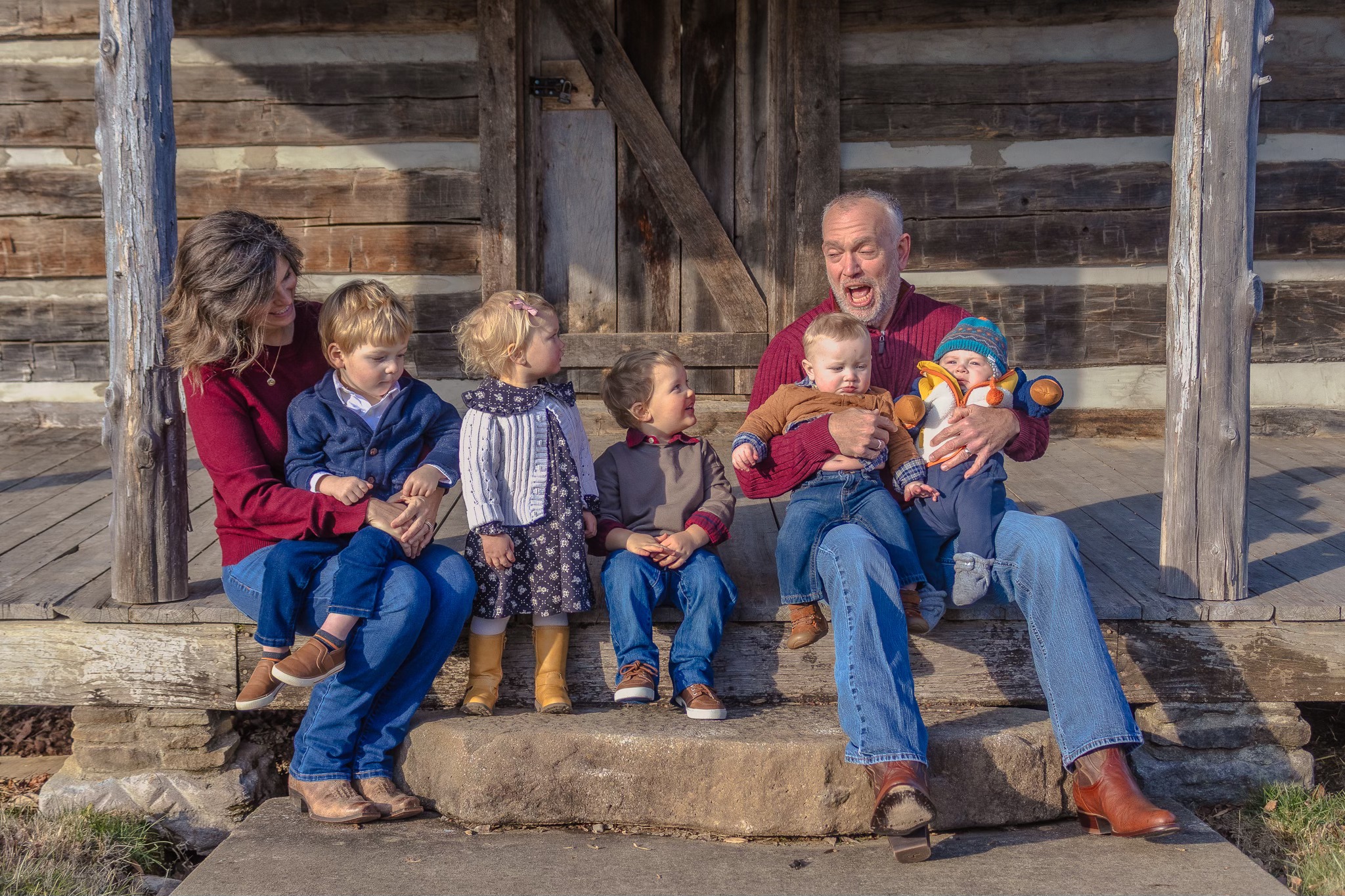
Then as I was in the kitchen Saturday night, I heard Neal gasp in the living room. I ran in there to find him looking at his phone and saying, “Oh no! Oh no!” I was so afraid to ask, “What happened?!” Our 3-year-old grandson got ahold of something toxic and was being medevaced to Vanderbilt.

I know it’s happened to you, too. You head into your weekend with plans but they’re upended. You wring your hands about something trifling only to have a real crisis come along and make you feel silly for ever giving the trifle a thought.

It’s the unexpected, horrible, fearful moments that sharpen my focus. I HATE them but apparently I still need them. Who cares about my neglected projects?! Neither of them were important. What’s the big deal about a few nights of fitful sleep? Many people lose sleep for far more serious reasons. I felt ashamed for complaining. I felt grateful for life, family, and answered prayers.

Last night in worship we sang, “All my life He has been faithful. All my life He has been so, so good. With every breath that I am able I will sing of the goodness of God.” I couldn’t even finish the song as the words hit me square in the heart and tears coursed down my cheeks.

I hope I’ll remember the lesson a little longer this time. When I was sulking, God knew what was coming. And in the middle of the 24-hour window of panic and pleading, I was reminded me of His grace and patience. I saw God’s tender care in the prayers and hugs from our church family. I saw the strength and faith of my son and daughter-in-law as their little boy struggled all night. I saw the selflessness of friends and family as they jumped in to watch the other children, feed their animals, and fill a pulpit.

When I awoke this morning, I didn’t give a single thought to unfinished projects. I thanked God that our grandson is going to be okay. I didn’t lose a weekend, I gained a better perspective.

“For you, O Lord, are good and forgiving, abounding in steadfast love to all who call upon You.”

(Psalm 86:5)

If you enjoy real mail, join our monthly snail mail club for Christian women: https://www.lifeandfavor.org/

Check out our Christian living books and bookish items: https://www.lifeandfavor.org/

Never Tear Down

By Kathy Pollard

The book of Nehemiah opens with an emotional scene. Having heard the disturbing news about the broken wall and burned gates of Jerusalem, Nehemiah sat down and wept. He mourned for days, fasted, and prayed (Nehemiah 1:3-4). As cupbearer to Artaxerxes, Nehemiah was not allowed to display his emotions. He was supposed to maintain a stoic composure while serving the Babylonian king. That is why he was “very much afraid” when the king said, “Why is your face sad, seeing you are not sick? This is nothing but sadness of the heart” (2:2). He must have been surprised and relieved when Artaxerxes offered to help him instead of punishing him. Nehemiah got permission to go to Judah and he immediately encouraged the people, “Come, and let us build up the wall of Jerusalem.” They responded to his passionate plea by saying, “Let us rise up and build,” and they “strengthened their hands for this good work” (2:17-18). Unfortunately, the very next verse introduces some troublemakers.  As soon as Sanballat, Tobiah, and Geshem heard the news about the rebuilding of the wall, they made it their mission to discourage the work (2:19). Through a series of scheming attacks, these three men kept Nehemiah on his knees in prayer for protection.  

Thankfully we would never attack God’s people with such vicious intention, nor would we make it our mission to tear down. But while we cannot imagine ourselves being seen as “adversaries” (4:15) of God’s people, I’m afraid there are times when our own attitudes or actions do in fact discourage the work. In the book of Nehemiah, we can easily identify the bad guys.  They are hateful and easy to dislike. But I wonder how they viewed themselves? They were men of position and importance. They thought the work of the Jews was in direct rebellion against the king (2:19).  They were wrong but they were acting on their own agenda. Perhaps there are times when we become so agenda-driven that we lose sight of the real mission (Mark 16:15). We can become the ones actually tearing down the good work. How sad when others can easily see the harm we are doing! To make sure we are not guilty of it or blind to it, let’s remember how Nehemiah’s naysayers behaved.

THEY WERE LED BY THEIR EMOTIONS

When Sanballat heard about the building of the wall, he was “angry and greatly enraged” (4:1). When Sanballat, Tobias, and others heard about the good progress being made, they were “very angry” (4:7) and upset enough to want to do harm (6:2). These men seemed to be reactionary. As soon as they heard something they didn’t like, they became furious and were quick to do something about it.

How often have we been guilty of the same thing? Many of our regrets are probably over things we said or did in the “heat of the moment.” Emotions like anger, fear, disappointment, jealousy, and even discouragement can lead us to say or do harmful things if not kept in check. “He that hath no rule over his own spirit is like a city that is broken down, and without walls” (Proverbs 25:28). Walls are for a city’s protection. Without them, a city is vulnerable to attacks. That’s part of the reason why Nehemiah was so distraught when he learned of the condition of the walls of Jerusalem. When we lack self-control, we leave ourselves more vulnerable to the enemy. Satan can use us as his tools and for his purposes when we aren’t thinking clearly. The fruit of the Spirit includes self-control (Galatians 5:22-23). When we do not practice self-control we are more likely to walk in the flesh, which includes “biting and devouring one another,” anger, and strife (Galatians 5:15-21).  

Build up instead. To safeguard against being reactionary, we must remember that the heart cannot always be trusted (Proverbs 28:26; Jeremiah 17:9). If there’s something we disagree with or don’t like, we must first look into the mirror of God’s Word for guidance (James 1:23-25). Then we will give the benefit of the doubt, practice patience, offer compassion, and always, always keep the big picture in mind, which is the building up of the kingdom (Ephesians 4:1-16).   

THEY TARGETED THE LEADERSHIP

When Nehemiah first heard about the problem, he chose to do something about it. He was the one who motivated everyone else to rebuild the wall.  He rolled up his sleeves and got to work. The troublemakers knew this and so they began to mock and ridicule him in the presence of others (2:19). Then they sent a message directly to Nehemiah (6:2).  

It is easy to be an “arm chair quarterback” in the church. Some are quick to question the leadership when they don’t like a decision that’s been made. They criticize the elders in conversations with others. Instead of being a part of the solution, they take the wind out of the sails of those who care enough to get their hands dirty and work. We must be very careful to not discourage church leaders. God has put them in that position (Titus 1:5) and commanded us to “esteem them very highly in love for their work’s sake” (1 Thessalonians 5:12-13). Nehemiah ended up feeling despised (4:4). May we never be guilty of causing the same feelings in our own good leaders!

Build up instead. Imagine how much stronger a church can be when her shepherds are encouraged, loved, and supported! We can tell the elders we’re praying for them, that we appreciate their sacrifice and labor of love (1 Timothy 5:17). We can freely offer our own services to help fill the gaps in local work.  We can build them up in the presence of others.  We can protect them by refusing to listen to harsh criticisms against them (1 Timothy 5:19). We can do our part to create a culture that respects authority in our own congregations. Everyone wins when the leaders are lifted up!

THEY USED THEIR WORDS AS WEAPONS

Sanballat, Tobiah, and Geshem began mocking Nehemiah and his fellow workers (2:20). Then they mocked all the Jews, calling them “feeble” (4:2). They tried to make the Jews feel inadequate. They tried to make them doubt their ability to build. “Will they restore it for themselves? Will they revive the stones out of the heaps of rubbish, and burned ones at that?” (4:2). Tobiah wanted them to feel like their work was worthless. He said, “Yes, what they are building–if a fox goes up on it he will break down their stone wall!” (4:3).

Perhaps the quickest way to tear down others is with our words.  “Death and life are in the power of the tongue” (Proverbs 18:21).  We can damage our marriages with hurtful words because we know where our spouse’s vulnerabilities lie. Whether we truly intended to or not, we can discourage good workers in the kingdom by causing them to question their own abilities. In this age of social media, it’s especially easy to wreak havoc.  We can harm reputations by labeling others.  We can post just enough to cause people to wonder about the soundness of certain individuals. Instead of having a loving conversation in private when there is a differing view or opinion, some have used every opportunity to ridicule a brother in a public manner. Condescension, insults, and sarcasm are used by those who have no problem with discouraging others.  

Build up instead. Surely the quickest and easiest way is with life-giving words. We can be more intentional about lacing our speech with grace (Colossians 4:6). We can make sure we only say things that will build others up and “minister grace unto the hearers” (Ephesians 4:29). We can accomplish so much good with sincere words of encouragement.  

THEY ATTEMPTED TO GET OTHERS ON THEIR SIDE

When Sanballat mocked the Jews, he “spoke before his brethren and the army of Samaria” (4:2). When they later heard of the progress being made, Sanballat and others “conspired all of them together, to come and to fight against Jerusalem, and to hinder it” (4:8). This got so bad that Nehemiah had to set up round the clock guards while they tried to continue building the wall (4:9).  Sanballat knew there was strength in numbers.  

We may try to defend, validate, or strengthen our position by looping others in on it.  We can create strife in the Lord’s church by complaining to others about a certain brother or leader. We can hurt our own marriages by trying to gain sympathy from best friends or parents when our spouse upsets us. We feel bigger and “righter” when we pull more people over to our side.

Build up instead. God wants His people to promote peace and unity (Ephesians 4:3). If we have a problem with someone, our options are to let it go (Proverbs 19:11) or go to that person in private (Matthew 18:15). We can make sure all of our actions will promote healing in the church body instead of strife.

THEY USED FEAR TACTICS

The fear felt by God’s people was visible (4:14). This must have been the method that Sanballat and his gang thought would be most effective.  Through some scheming and deception, they hoped fear would lead to discouragement which would paralyze the work. They even accused God’s people of things that weren’t true concerning their motives and agenda (6:6-7). Nehemiah recognized it for what it was (6:9).

Even the Lord’s church has her share of tormentors. Anyone who glories in “beating down” another person with powerful arguments or fierce demeanor, who boasts of their own verbal victories, who uses veiled threats or intimidation has become nothing less than a bully.

Build up instead. The “spirit of fear” does not come from God (2 Timothy 1:7). We can do the same thing Nehemiah did to help God’s people get past it. He reminded them to keep their eyes on God instead of the adversaries (4:14, 20). He had the people working side by side while they were building the wall (chapter 3). He spent much time in prayer on their behalf. If we spend our time and energy doing these same three things, we can be sure that we are being an advocate instead of an adversary.

Perhaps the greatest motivation to never tear down is what ultimately happened in the book of Nehemiah. Sanballat, Tobiah, and Geshem were foiled by God. God “frustrated their plan” (4:15). How satisfying to read how the naysayers reacted when the wall was completed! “And when all our enemies heard of it…[they] fell greatly in their own esteem, for they perceived that this work had been accomplished with the help of our God” (6:16). The NASV reads, “They lost their confidence.” What happened to their bravado?

God promised to build a kingdom that would never be destroyed, and He did (Daniel 2:44; Matthew 16:18).  He is going to protect her from anyone trying to tear her down. God help us see and remove any destructive ways in ourselves.  

Resources for you!

If you love getting real mail, join A Tiny Spark, a snail mail club for Christian women!
Check out our books and bookish items.


52 Reasons to Love the Church

#14-Examples of Faithfulness

By Kathy Pollard

One of our church members just lost her mother. I overheard Neal’s conversation with her on the phone. He was listening to our member describing her mother’s diligent faithfulness and examples of quiet service. At one point he said, “Her life wrote her funeral sermon.”

I’ve been to funerals where it seemed like people couldn’t say enough good things about the deceased. Stories and tears and smiles were shared as they recalled their loved one’s thoughtful acts or influence or loving spirit.

In Hebrews eleven, the inspired writer gives a long list memorializing men and women whose lives were characterized by faithfulness. He did that to encourage the readers not to give up or turn back. He calls these faithful examples their “great cloud of witnesses” that should spur them on to “run with endurance the race set before them.” And then he tells them to “look to Jesus,” the “perfecter of our faith,” their greatest example of faithfulness (Heb. 12:1-2).

I’m thankful for my own cloud of witnesses, aren’t you? Those who have gone on before me and those who are still with me, whose examples convict me and inspire me. Some have shown me that faithfulness is possible even through overwhelming difficulties or harsh circumstances. Some have inspired me through their diligent service despite physical difficulties or health issues. And many have encouraged me through their lifelong love for God, the faithful legacy they are leaving their children and grandchildren. These individuals remind me of Jesus. They remind me to look to Jesus!

Thank God for faithful Christians!

“Therefore do not throw away your confidence, which has a great reward. For you have need of endurance, so that when you have done the will of God you may receive what is promised.”

(Hebrews 10:35-36)

My grandpa, Dale Gillaspie, and Neal’s grandpa, H.E. Mitchell

When the Rubber Meets the Road

By Emily Pollard

We’ve all heard the phrase, “When it rains, it pours.” While there are rare occasions that we might get to focus on a single responsibility or situation, most of our time is spent juggling several simultaneously. When one challenge arises, we expect a few more to come knocking. While this can be overwhelming (a feeling Satan just loves for us to have), these are the times in our life when we find out what we’re really made of. When it seems hardest to make a godly decision, when it seems impossible to know the right answer, when you don’t WANT to do the right thing, when the rubber meets the road, your response reveals the contents of your heart. Over the past few weeks, I have seen fellow Christians, young children, and total strangers whose lives have been turned upside down by tragedy, uncertainty, and harm. In moments like these, we must ask ourselves: When the rubber meets the road, who am I? In His word, God tells us how we can know who we truly are. The following questions paired with scripture help us answer this question for ourselves. 

>>When life gets hard what do I cling to for comfort? 

1. Read Numbers 13:25-14:4… After spying out the land of Canaan, fear turned the Israelites’ hearts back towards Egypt. They had finally set their eyes upon the promised land…but it wasn’t that simple. Canaan was filled with bigger, stronger men than the Israelites. Instead of marching forth in faith to overtake the land, the Israelites’ response was to retreat to their past lives in slavery to Egypt. When life gets hard, do I miss my past life without God?

2. Read Psalm 18:29-31…When David was surrounded by adversity, his gut reaction was to cry out to God. David relied solely on the power, perfection, and precepts of God to pull him through. When life gets hard, is turning to Him my gut reaction?

>>How much can my faith take? 

1.     Read Job 2:9…Job’s wife endured suffering and loss alongside Job, but her faith in God had its limits. Faithfulness to God wasn’t worth the pain. When our faith crumbles, our hope is lost along with it. Job’s wife allowed present sorrows to overshadow her trust in God. At what point does life shake my faith? How much can life dish out before my faith in God’s way and word weakens?

2.     Read Job 2:10…Job kept his faith, knowing that hardships are inevitable. God blesses, but He also disciplines those He loves (Heb. 12:6-7).

>>Do I let my own life take away from the good I can do for others? 

1.     Read Phil. 2:3-11… Christ knew the pain, temptation, and ridicule that awaited, yet His heart was not consumed with His own grief. Pain was part of the process. The sole purpose of Jesus’ life was to offer healing, hope, and salvation to others. Our Savior’s earthly hardships never swayed Him from His Heavenly purpose. Do I allow my own stress and difficulties to distract me from lightening the burdens of others?

“Trials teach us what we are; they dig up the soil and let us see what we are made of.”

– Charles Spurgeon

That Perfect Married Couple

By Kathy Pollard

Do you know that perfect married couple?  They look happy together.  They’re always holding hands and seem to have it all figured out.  People look to them for advice.  They’re the hashtag-relationship-goals of social media.  I could name some couples that fall into this category for me.  I’m grateful for their example of marital bliss, and their PDA posts make me smile.

Neal and I are not that perfect married couple.  A superficial glimpse might make it appear that we are.  We do hold hands.  We do say nice things to and about each other on social media.  We’ve been asked to teach the occasional marriage seminar.  And so every now and then someone will remark on our relationship as being “exemplary” or some other thoughtful description.  I thank them because I appreciate their kindness but inwardly I cringe and think, “Far from it.”  We agree to teach about marriage because we can study what God’s Word has to say about it.  After nearly 27 years together, we can share some lessons we’ve learned from experience (some of them the hard way).  But we have had our own struggles and are still learning and growing, one year at a time.  We’ve hurt each other and let each other down.  As a wife, I’ve been guilty of lying, betraying, sulking, and manipulating.  Some of those hurtful things I knew I was doing in the moment.  Some of them I only realized later when I looked back over my behavior.  Our marriage has had rocky times because of the pressures of trials.  And our marriage has had rough patches because of the consequences of our own choices.  We’ve had to practice forgiveness, patience, and grace.  No, we are not that perfect married couple.

But we are a married couple and our God is perfect.

I’ve been reminded of this truth a couple of times this week.  Take a look at these “perfect” couples.

IMG_4539

I met this couple last night.  They got married at ages 15 and 17, and have been married for 55 years.  I asked them separately what has held them together for over half a century, especially since they started out so young.  Without hesitating, each of them said, “God.”  For them, it was as simple as that.  When they were standing together again, I pointed out that they each gave the same one-word answer.  She laughed and said, “Without God, I would’ve kicked him out a long time ago!”  They went on to add other advice, like the importance of giving 100% instead of 50/50 (and making that determination each new day).

IMG_4536

I met this couple two nights ago.  They’ve been married for 67 years!  It didn’t take long to figure out what has held them together.  She told me their first date was at Mammoth Cave.  He nodded and said, “I should’ve left her down there.”  He shared their secret to commitment:  “Divorce never crossed our minds.  Murder did, once or twice, but divorce was never an option.”  We all laughed and they looked at each other with a twinkle in their eyes that gave me a glimpse of the young couple they once were.  I loved their sense of humor and strong faith (made obvious by supporting a gospel meeting on a weeknight).  I imagine 67 years has given them a few stories of hardships and struggles but they are still together, still sharing some laughs, and still holding hands.

These are the real, perfect married couples.  I don’t know them well enough to see beyond the superficial.  But I do know that they’ve entrusted their marriages to their perfect God.  How blessed we are to enjoy life together, find reasons to smile, and keep holding hands despite our imperfections!

Now to Him who is able to do far more abundantly beyond all that we ask or think, according to the power that works within us (Eph. 3:20).

What the Promised Land did for Me

The most frequently asked question since our return home from Israel has been, “What was your favorite part?”  That is nearly impossible to answer.  There were too many wonderful experiences and highlights, each of them meaningful for different reasons.

I can say for certain that it was my “trip of a lifetime” and that it impacted me in multiple ways.  I am most thankful for three of those ways:

It strengthened my faith in the Word.

No doubt about it, the places and people we read about in the Bible are REAL.  Archaeologists continue to uncover locations, discover documents, and learn about practices that prove the truth of God’s Word.

For example, the Bible mentions a place called “Sha’arayim,” which means “two gates” (Josh. 15:36; 1 Sam. 17:52; 1 Chron. 4:31).  Scoffers declared this unlikely as no Judaean city ever had more than one gate, according to archaeological discoveries.  But in 2007, an entire fortified city was unearthed having, not one, but two major gates.  It overlooks the Elah Valley, confirming the Bible’s mention of it in the account of David and Goliath.

I knew the Bible was accurate and reliable.  But it is so faith-building to have that truth confirmed by walking through the MANY “proofs” that populate the land of Israel!

It enhanced my understanding.

David took refuge in “the stronghold” (1 Sam. 22:3,4).  Masada (which means “stronghold”) was a city that sat atop a steep hill out in the middle of an arid wilderness, overlooking the Dead Sea.  It’s location made it easy to see approaching enemies.  It had a “snake path” up the side that could handle only two people wide at a time.  It was impressive!  Scholars believe that this was David’s stronghold.  Now when I read about it, I will be able to see it.

In You, O Lord, I have taken refuge…Be to me a rock of strength, a stronghold to save me, for You are my rock and my fortress.

Psalm 31:1-3

19665296_10212951731206157_2681297224488838180_n
First view of Masada


And when I read about David hiding in caves in Adullam (1 Sam. 22:1-4), I will be able to see it.  I understand how easy it was to do that in a land dotted with large, hidden caves.  Adullam means “refuge.”

19989604_10213044050674086_1387303708444527981_n
One of the caves at Adullam

When I read about Jesus praying at Gethsemane (Matt. 26), I will be able to picture Him among the twisted trunks of the olive trees.  I can now see exactly where He pleaded with His Father.

20228575_10213068134116157_1737335139035246931_n
Olive trees in Gethsemane

There are so many accounts that have come alive in my mind!  I can add extra senses (sight, sounds, smells, touch….) to my understanding.

It engaged my heart.

You don’t have to go to Israel to be touched by the love stories in the Word.

(How can you read about God’s call to Abraham to take his son and offer him, and then God’s deliverance and provision when He rewarded Abraham’s obedient faith without being moved?)

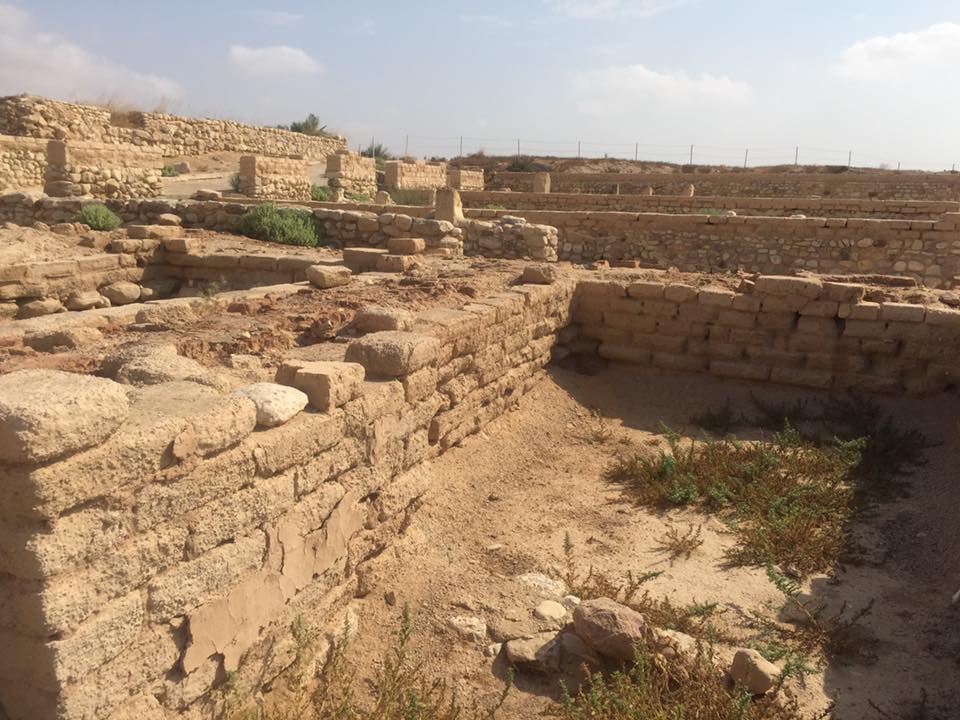
But I had the opportunity to go to Beersheba.  It’s in the middle of the Negev desert.  It’s where Abraham made a covenant with Abimelech and planted a tamarisk tree (Gen. 21), where he sent Hagar into the wilderness, and where he went to live after God said, “Because you have not withheld your son, your only son, I will greatly bless you….” (Gen. 22).  I looked all around me and imagined the account playing out in front of my eyes.

19702035_10212926203647984_213622114031100044_n
Beersheba

I had the opportunity to visit the two proposed sites of the Garden Tomb.  While at the first one, I read John’s gospel account of the empty tomb.  I looked at the rock tomb in front of me and read of Mary standing there weeping, of Jesus approaching her and calling her by name, and of her declaration to the disciples, “I have seen the Lord!”

20108454_10213068019393289_2626198310643227936_n
The Garden Tomb

There were so many emotional moments as we walked through the land of Israel.  I imagine part of that had to do with stepping away from the distractions of the world and immersing myself in the unfolding story of God’s redemption and love.  My heart was revived.

I pray that I will remember that I don’t have to go to Israel to do that.  I can still shut out the world’s distractions and immerse myself in the beautiful and powerful message of God’s love. 

Revive Me #49–See God at Work

Revive Me, Week 49–A Year of Growing Stronger in the Lord

See God at Work

I love the idea of keeping a prayer journal.  At ladies’ Bible class this past week, Anthea Carelse shared how she does hers.  I thought it was so great that I plan to do the same thing.  Instead of coming up with New Year’s resolutions, Anthea spends time creating her prayer journal for the year.  She thinks of and writes down her list of major prayer requests/ concerns.  She adds to it throughout the year.  She said that her favorite part is looking back a few weeks or months later and seeing how many she can cross off the list.  Anthea said that at the end of the year, she looks back over her prayer journal and can clearly see how most of her prayers were answered or in the process of being answered.  How faith building!

Anthea’s idea is a great one because it’s a reminder to see God at work.  When we do that, we will be more thankful for His love and attention.  We can always grow in our faith and in our gratitude.  Acknowledging answered prayers is an easy way to do that.

And this is the confidence that we have toward Him, that if we ask anything according to His will He hears us. And if we know that He hears us in whatever we ask, we know that we have the requests that we have asked of Him.

–1 John 5:14,15

“Leave it all in the Hands that were wounded for you”

(Elisabeth Elliot)

Suggestions for the Week:

  1.  Purchase a spiral bound notebook or pretty journal and be thinking about the specific prayer requests/ concerns you’d like to write down on January 1st.
  2.  Besides building faith and growing gratitude, keeping track of God’s work in your life can also keep complaining and the martyr complex at bay.  What other benefits can you think of that will come from acknowledging answered prayers?
  3.  Read the following verses and note the conditions mentioned for answered prayer:

1 John 5:14,15-

John 15:7-

Matt. 7:7-

Psalm 37:4-

James 5:16-

Luke 18:1-

Read it.  Memorize it.  Live it.

o-writing-pen-and-paper-facebook
Image cred: Huffington Post


Revive Me #16–Be Marvelous!

Revive Me, Week 16–A Year of Growing Stronger in the Lord

Be Marvelous!

“Now when Jesus heard this, He marveled at him, and turned and said to the crowd that was following Him, ‘I say to you, not even in Israel have I found such great faith.'”

(Luke 7:9)

Reading about something that causes Jesus to marvel catches my attention.  What did that man do to amaze Jesus?  In the beginning of Luke 7, we read about a centurion whose slave was about to die.  He sent for Jesus.  When the centurion heard that Jesus was on the way, he sent messengers to Him to say He needn’t “trouble Himself” to come all the way under his roof.  He said, “Just say the word, and my servant will be healed” (v. 7).  He spoke of Jesus’ authority and power.  Simply put, the centurion’s speech revealed his great faith.

Words can also reveal weak faith.  When the disciples of Jesus experienced a storm, they said, “Save us, Lord; we are perishing!” Jesus said, “Why are you afraid, you men of little faith?” (Matt. 8:23-26).

Peter took a few brave steps onto the water but then he “became frightened” and began to sink.  He cried out, “Lord, save me!”  Jesus said, “You of little faith, why did you doubt?” (Matt. 14:28-31).

What does your speech reveal about your faith?

Is it obvious to those around you that your faith is great?  No matter what life throws at you, you’re quick to speak of the authority and power of Jesus.  You happily turn control over to Him.  You exude confidence and peace because of your trust in the One who can heal the broken and calm the storms.

Or  does your speech reveal a little faith?  You’re a fretter.  You’re easily overwhelmed.  You allow the things of this world to intimidate you.  When you experience a storm, your words reveal your fear.  When you begin to sink, your cries reveal your doubt.

I want Jesus to marvel at my faith, don’t you?

This week, be marvelous!  Create opportunities to declare your great faith.

Suggestions for the week:

1.  Marvelous is a terrific word.  Look it up.  Just reading the definition and its synonyms will make you feel good.

2.  Study the accounts of the centurion and his great faith (Matt. 8:5-13; Luke 7:1-10).  Also study the accounts of those who dismayed Jesus by their little faith (Matt. 6:30; 8:26; 14:31; 16:8).  What situations did these individuals find themselves in?  How did they react?

3.  Think of your specific storms.  How have you reacted?  Have you allowed fear and worry to weaken your faith?  What will you do and say to show your great faith?

4.  Be mindful of opportunities this week to cause others to marvel at your great faith.

12079701_10207466089668547_3509261305970706551_n

Growing Your Faith

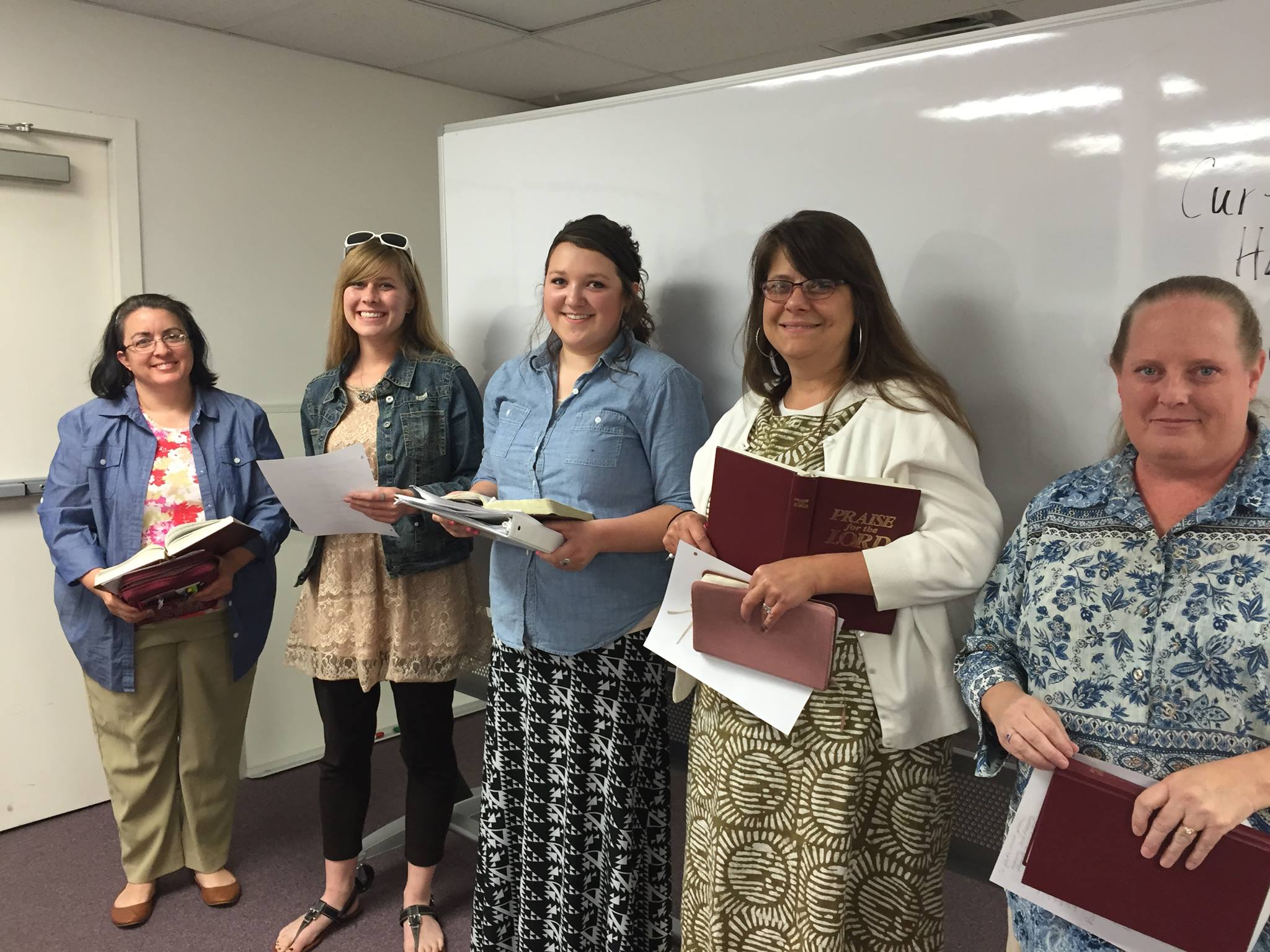
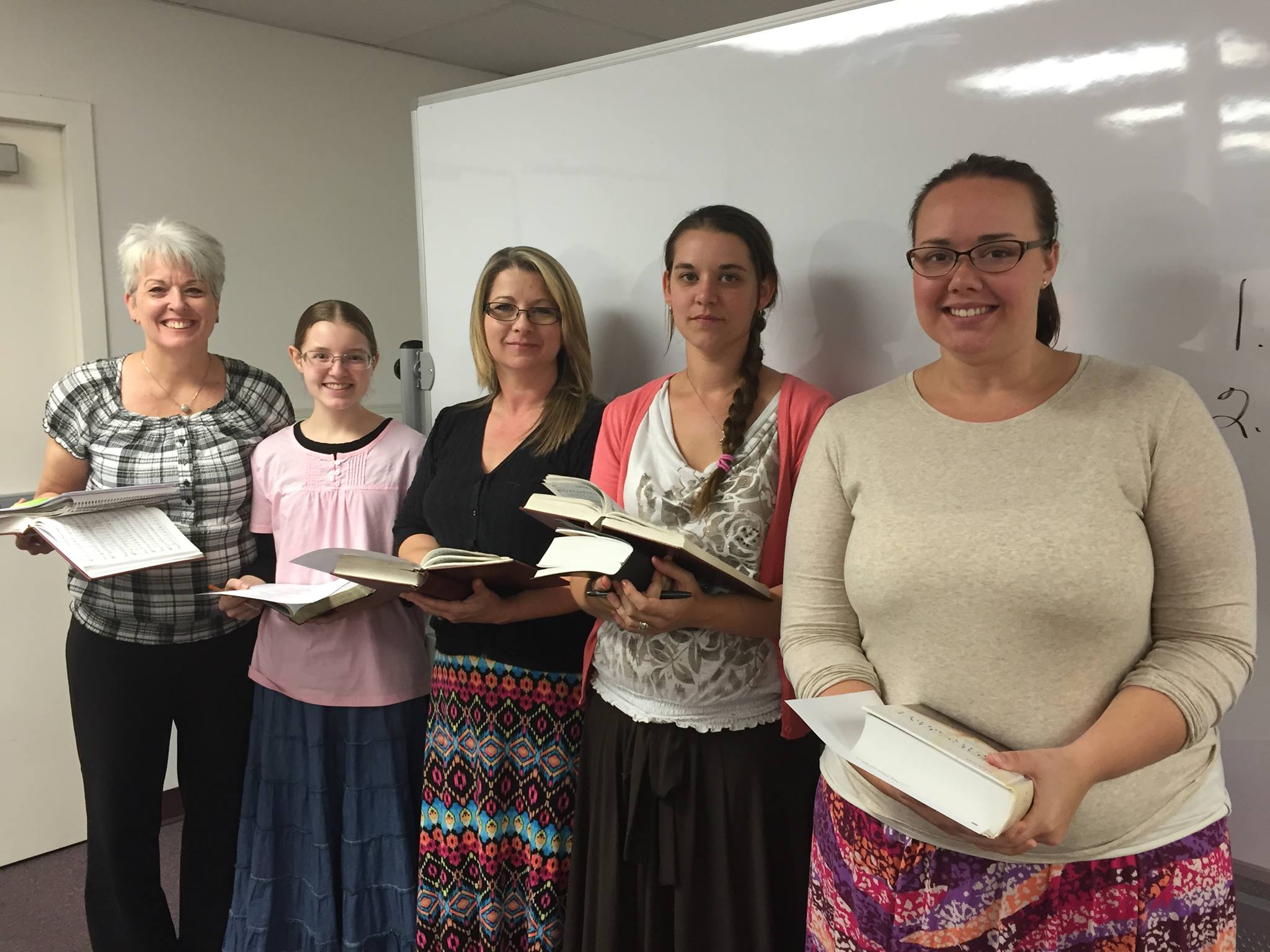
This quarter at the Bear Valley Bible Institute International, I’m teaching “Personal Spiritual Growth” in the Women’s Program.  There are 24 wonderful women in the class.  One of their recent assignments was to write a 6-page paper about growing their faith.  Not only did I learn a lot while grading their papers, but it also gave me additional insight into their good and tender hearts.

I asked the ladies if any of them would be willing to share what they considered to be their best thoughts from their paper with you.  Here is what I received:

  • “Sometimes it is easy to be down on ourselves. That really is where Satan would like to keep us. He would like to keep reminding us that we are not worthy of the love of our Savior. Some are defeated because of thoughts like this. But we only have to remember Paul’s story to know what a lie this is. He shows us right here how unworthy he feels and really, all of the terrible things he did that might make us agree with him. But the love of Jesus and His grace is for all of us!” —Abigail Warnes
  • “Now that we know we have baggage, we must focus on making a conscious effort in training ourselves to change this behavior and eliminate the baggage.  You can do this by replacing these thoughts with scripture, spending time helping someone else, or focusing on how these situations may glorify God. Romans 8:28 shows us that all things work together for those who love the Lord. Over time these things seem to be less important, and it may even motivate you to mend past relationships. A verse that personally helped me is Romans 12:21, “Don’t be overcome by evil, but overcome evil with good.”  It showed me that by replacing these negative thoughts with positive ones and actively doing for others instead of being self-absorbed, God will give us that peace that surpasses understanding in Phil 4:7. I honestly believe once we begin doing these, that’s when we find the true joy and the past has no relevance in the present.”  —Bonnie Saldana
  • “If you aren’t growing spiritually, your mind is still on the fleshly and you are dead (Romans 8:5,6).  God can use anyone’s situation, but He uses you to the fullest when you let go of the past.”  —Christa Bassett
  • “There are many flashing lights in this world that can pull us towards them, but if we are focused on becoming mature in our faith we can overcome those desires and know that what the Lord provides for us is enough (Matthew 6:33). Our worldly passions can lead us to many undesirable attitudes about “THINGS,” so when we can get these desires under control, we can soar to a higher spiritual calling rather than to the desires and riches of this world (1 Timothy 6:17).” —Monica R. Gibson
  • “Another way to become spiritually mature is to train ourselves to know right from wrong (Hebrews 5:14).  We are bombarded every day by what other people believe to be truth–in schools, on TV, in magazines, on the radio, on the internet, in books written by scholarly men, by scientists, the list could go on.  What source are we using to determine truth?  If we rely on others to tell us what is true, we leave ourselves vulnerable to false teaching (Gal. 1:6-9).  The Bereans gladly searched the Scriptures daily to make sure what they were hearing was accurate (Acts 17:11).  We need to behave as the Bereans, and be eager to search the Scriptures daily to train ourselves on what is truth and what is error (2 Tim. 3:16,17).  This is the only way we will be able to stand on solid ground when we are presented with having to defend the truth.”  —Carol Melton
  • “Though putting on the nature of God takes effort, it is rewarding.  He makes provisions for us in our struggles. Like the story of the house swept clean of demons, we must replace the bad with something good. ‘Now flee from youthful lusts and pursue righteousness, faith, love and peace, with those who call on the Lord from a pure heart’ (2 Tim 2:22).” —Brenda Woolery
  • “The past can weigh us down and has the ability to hold us back from growing. Sometimes it can be hard to forgive ourselves from our past. Paul certainly struggled with this. He states, ‘Even though I was formerly a blasphemer and a persecutor and a violent aggressor. yet I was shown mercy because I acted ignorantly in unbelief’ (1 Tim 1:13). It can become a ball and chain around our leg stopping us from running the race as we should.”  —Tracy Threlfall
  • “You can’t grow in your faith if you’re still living in the past.  Being stuck in the past can keep you from moving on toward spiritual maturity.  Your faith will grow as you see that knowing Jesus is the most important thing in life.”  —Laura Jensen
  • “When we are baptized, ALL our sins are washed away.  God remembers them no more!  From that point on, when we stumble, we ask forgiveness and He removes those sins also.  We are told in Colossians 1:13,14, ‘He has delivered us from the domain of darkness and has transferred us into the kingdom of His beloved Son, in whom we have redemption, the forgiveness of sins.’  If God can do that, why can’t we forgive ourselves?  I believe Satan puts doubt in our minds and makes us recall memories in order to confuse us and draw our minds away from God.  James 4:7 tells us, ‘Submit yourselves therefore to God.  Resist the devil, and he will flee from you’ (ESV).  1 Peter 5:8 says, ‘Be sober-minded; be watchful.  Your adversary the devil prowls around like a roaring lion, seeking someone to devour.’ If we can keep doubt in perspective, we will know it comes from the devil.  And if we keep our focus on God, we can resist the devil’s attempts to discourage us.”  —Brenda Stow

10620495_10206174749585852_1056074534779123308_o

11201005_10206174749545851_4601603784600080937_o

11169571_10206174749505850_5140121151108354339_o

11206810_10206174749465849_7118986397712389568_o

10847194_10206174749385847_4449990598935146005_o

10 Things I Want My Sons to Have When They Leave Home

Our sons are almost 21, almost 19, and 16 years old.  I want them to be happy and healthy, but more than anything, I want them to have their own genuine relationship with God.  Here are 10 things I pray they will have when they leave home:

I.  HONESTY

God is love, so when I hear that He hates something, it catches my attention.  Proverbs 6:16-19 lists seven things God hates, and lying is mentioned twice!  Honesty tops my list of Ten Things because of what honesty prevents:

  • Deceiving self.  Self-honesty is crucial to personal Christianity.  How will my sons know if they’re in a right relationship with God if they’re deceiving themselves in their self-evaluation (1 Cor. 11:28)?  The Bibles says, “Test yourselves” (2 Cor. 13:5).  The very word test implies honesty.
  • Making excuses.  Excuses are cover-ups for short-comings.  They’re what we come up with when we try to remove the blame or responsibility for something.  ”Excuses are the nails used to build a house of failure.”  I want my sons to build their houses on the rock.  According to Jesus, that means they will hear His words and DO them, not make excuses for what they’re not doing (Matt. 7:24).
  • Moral Dilemmas.  Dishonesty leads to moral dilemmas in so many areas of life– business relations, taxes, academics, moral ethics.  Dishonesty produces a life of double standards.
  • Distrust.  One lie can destroy years of trust, trust that will take a long time to be restored.  A dishonest person won’t have good relationships with coworkers, with elders, with his wife & children, or with his church family.

II.  PURITY OF HEART

As a mother of three boys, I’ve felt many moments of indignation at all the sexual impurity bombarding us from all sides.  Purity of heart made my list of Ten Things because if my sons don’t have pure hearts:

  • They won’t see God (Matt. 5:8).
  • They will be in a war waging against their soul (1 Pet. 2:11).
  • They will be instruments of unrighteousness (Rom. 6:13).
  • They will not inherit the kingdom of God (Gal. 5:19-21).

With our sex-saturated society, the idea of raising pure-hearted boys may seem to be an uphill battle against overwhelming odds.  But our young men need to know that God’s promise still holds true:  “No temptation has overtaken you except such as is common to man; but God is faithful, who will not allow you to be tempted beyond what you are able, but with the temptation will also make the way of escape, that you may be able to bear it” (1 Cor. 10:13).

III.  COMPASSION

My sons will be guilty of hypocrisy if they’re big on keeping the law but lack compassion (Matt. 23:23).  Some do what they’re supposed to do and say what they’re supposed to say, but they’re hard on others.  They speak harshly of the shortcomings of others and act morally superior.  This is a heart problem.

Compassion will motivate my sons to see the good in others, to look for ways to build up and encourage, to see souls as the Savior does (Mark 6:34).

IV.  HUMILITY

If my boys leave home without humility, they leave home without having the mind of Christ (Phil. 2:5-8).  Humility had to make my list of Ten Things because without it, my sons will head for destruction and dishonor (Prov. 18:12).  Humility affects their very relationship with God:

  • How close they’ll be to Him (Psa. 138:6,7)
  • Whether or not they’ll be guided & taught by Him (Psa. 25:9)
  • Whether or not they receive His grace (James 4:6)
  • Whether or not they’ll be exalted by Him (2 Pet. 5:6)

V.  SELF-MOTIVATION

Laziness can become a lifestyle.  In my [humble] opinion, there are a few habits that prevent men from really making a difference:

  • Dressing sloppily because they’re too lazy to tidy up
  • Keeping a disorganized office or work space
  • Being late to work or appointments; missing deadlines
  • Needing someone else to prod them along in order to complete assignments or commitments

Self-motivation, on the other hand, promotes:

  • The ability to tackle hard things instead of avoiding them
  • Discipline in areas of time-management, healthy eating, and exercise
  • The internal drive to always do their best
  • The desire to look for ways to serve and be involved, instead of waiting to be asked or waiting for someone else to take care of it
  • The wisdom to know when to ask for help instead of making excuses

VI.  GRATITUDE

Gratitude is the opposite of self-pity.  I don’t want every conversation my sons have to revolve around how hard things are for them.  I don’t want them to be needy for attention and sympathy.  I don’t want them to have a difficult time being happy and content.  They can’t be grateful and feel sorry for themselves at the same time!

Gratitude sees the blessings in life and sees problems as opportunities for growth.  Self-pity thinks, “Woe is me,” while gratitude quietly waits for God to fulfill His purpose in difficult situations.

My sons are going to face difficulties.  They’re going to be treated unfairly.  They’re going to be disillusioned at times.  Their mindset will determine how they handle it.  They can wallow in self-pity and complain about their circumstances, or they can be grateful for what they have, Who provides for them, and where they are going (1 Thess. 5:18; Phil. 4:11).

VII.  RESPECT FOR AUTHORITY

If my sons are allowed to disrespect authority in the home, they will carry that disrespect into the rest of their lives.  God commands His people to show respect for authority:

  • Children to parents (Eph. 6:1,2)
  • Wife to husband (Eph. 5:22-24)
  • Members to elders (Heb. 13:17)
  • Citizens to government (1 Pet. 2:13-17)
  • Servants to master (Eph. 6:5-8)

When rebellious men in the Lord’s church disagree with a decision made by the elders, they’ll say, “I don’t care what they say; I’m going to do it the way I want.”  Obviously these men were never taught to respect authority.  I want my sons to understand the importance of respecting authority even in times when they think those in authority are being unreasonable.  Those in authority who abuse their position will one day answer to God.  My sons need to make sure their own actions glorify God.

VIII.  FRIENDLINESS

Concerning friendliness, someone wrote, “It’s amazing what a warming influence it can have on an otherwise dreary world.”

Whether they’re going off to college, visiting a new congregation, or greeting their future in-laws, I want my sons to be able to initiate warmth and friendliness.  I want them to be quick to smile, greet, and assume the best in others.  I don’t want them to sit back and wait for others to approach them.

IX.  COMMITMENT

A lack of commitment will make my sons give up when their marriage relationship gets rocky.  It will make them neglect evangelism after only a few rejections.

Commitment will keep my sons from giving up or giving in.  It will be what keeps them going back to a job they dislike so they can pay the bills.  It will keep them knocking on doors to set up Bible studies.  It will motivate them to make the right choices and say the right things regardless of how they feel.  It is 1 Corinthians 15:58 lived out on a daily basis.
X.  FAITH
When my sons leave home, I want them to have a real, personal, genuine faith.
  • When my sons hear something different from what they’ve always been taught, where will they turn for answers?  My prayer is that they’ll always turn to God’s Word to define and secure their faith (Rom. 10:17).
  • When my sons feel discouraged, who will they lean on?  My prayer is that they’ll lean on the Lord (1 Pet. 5:7).
  • When they feel like they’re all alone in terms of moral convictions, what will they do?  My prayer is that they’ll have the courage to stand for what’s right even if no one stands with them.

For the faith of my sons to be real and enduring, it must be built on Scripture.  Not on family traditions or feelings.  Not on the level of love we have for them.  Not on our level of good works, or theirs.  For their faith to be living & powerful, it must be rooted in the Word of God (Heb. 4:16).

My sons may be in a new environment, but God’s Word will remain the same.  They may be surrounded by new people, but God’s Word will still hold true.  They may be tested in ways they’ve never been tested before, but God’s Word will always carry them through.  IF it’s the foundation of their faith.

Prayer for Today:  Lord, you know my daily prayer is that my sons will always put You first.

*This post can now also be found at A Wise Woman Builds.