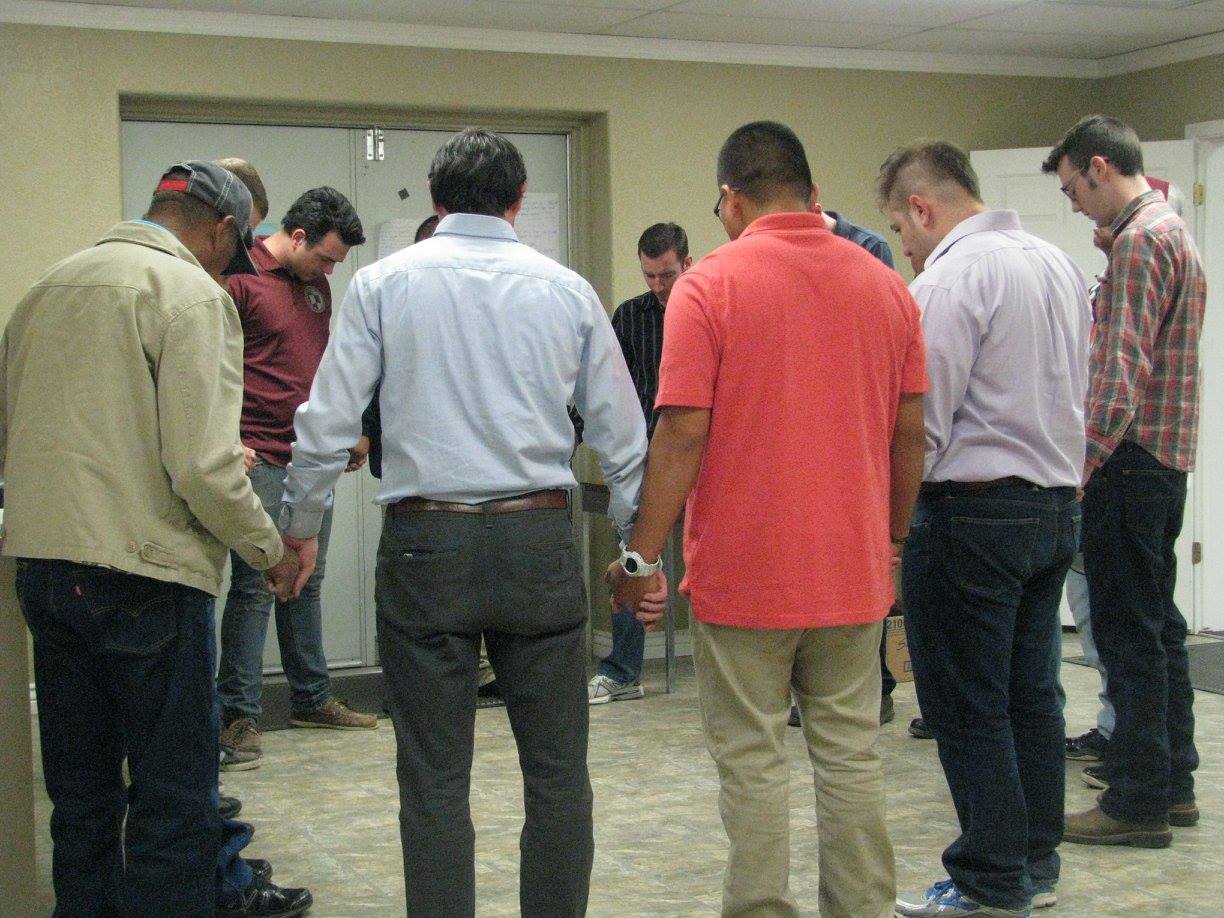
A Perspective Shift

By Kathy Pollard

I had two major projects in mind for our fair-weather, mostly-free weekend. One was outside, one was inside, and both required help from my strong husband. Instead I ended up taking him to Urgent Care on Friday and he spent the weekend on antibiotics and pain meds with his left leg elevated. I felt bad for him but also felt sorry for myself for my foiled plans.

On top of that, our 11-year-old Westipoo started having nighttime anxiety. I felt bad for him but also felt sorry for me because all that shaking and panting is interfering with decent sleep.

Grumble, grumble.

Then as I was in the kitchen Saturday night, I heard Neal gasp in the living room. I ran in there to find him looking at his phone and saying, “Oh no! Oh no!” I was so afraid to ask, “What happened?!” Our 3-year-old grandson got ahold of something toxic and was being medevaced to Vanderbilt.

I know it’s happened to you, too. You head into your weekend with plans but they’re upended. You wring your hands about something trifling only to have a real crisis come along and make you feel silly for ever giving the trifle a thought.

It’s the unexpected, horrible, fearful moments that sharpen my focus. I HATE them but apparently I still need them. Who cares about my neglected projects?! Neither of them were important. What’s the big deal about a few nights of fitful sleep? Many people lose sleep for far more serious reasons. I felt ashamed for complaining. I felt grateful for life, family, and answered prayers.

Last night in worship we sang, “All my life He has been faithful. All my life He has been so, so good. With every breath that I am able I will sing of the goodness of God.” I couldn’t even finish the song as the words hit me square in the heart and tears coursed down my cheeks.

I hope I’ll remember the lesson a little longer this time. When I was sulking, God knew what was coming. And in the middle of the 24-hour window of panic and pleading, I was reminded me of His grace and patience. I saw God’s tender care in the prayers and hugs from our church family. I saw the strength and faith of my son and daughter-in-law as their little boy struggled all night. I saw the selflessness of friends and family as they jumped in to watch the other children, feed their animals, and fill a pulpit.

When I awoke this morning, I didn’t give a single thought to unfinished projects. I thanked God that our grandson is going to be okay. I didn’t lose a weekend, I gained a better perspective.

“For you, O Lord, are good and forgiving, abounding in steadfast love to all who call upon You.”

(Psalm 86:5)

If you enjoy real mail, join our monthly snail mail club for Christian women: https://www.lifeandfavor.org/

Check out our Christian living books and bookish items: https://www.lifeandfavor.org/

Never Tear Down

By Kathy Pollard

The book of Nehemiah opens with an emotional scene. Having heard the disturbing news about the broken wall and burned gates of Jerusalem, Nehemiah sat down and wept. He mourned for days, fasted, and prayed (Nehemiah 1:3-4). As cupbearer to Artaxerxes, Nehemiah was not allowed to display his emotions. He was supposed to maintain a stoic composure while serving the Babylonian king. That is why he was “very much afraid” when the king said, “Why is your face sad, seeing you are not sick? This is nothing but sadness of the heart” (2:2). He must have been surprised and relieved when Artaxerxes offered to help him instead of punishing him. Nehemiah got permission to go to Judah and he immediately encouraged the people, “Come, and let us build up the wall of Jerusalem.” They responded to his passionate plea by saying, “Let us rise up and build,” and they “strengthened their hands for this good work” (2:17-18). Unfortunately, the very next verse introduces some troublemakers.  As soon as Sanballat, Tobiah, and Geshem heard the news about the rebuilding of the wall, they made it their mission to discourage the work (2:19). Through a series of scheming attacks, these three men kept Nehemiah on his knees in prayer for protection.  

Thankfully we would never attack God’s people with such vicious intention, nor would we make it our mission to tear down. But while we cannot imagine ourselves being seen as “adversaries” (4:15) of God’s people, I’m afraid there are times when our own attitudes or actions do in fact discourage the work. In the book of Nehemiah, we can easily identify the bad guys.  They are hateful and easy to dislike. But I wonder how they viewed themselves? They were men of position and importance. They thought the work of the Jews was in direct rebellion against the king (2:19).  They were wrong but they were acting on their own agenda. Perhaps there are times when we become so agenda-driven that we lose sight of the real mission (Mark 16:15). We can become the ones actually tearing down the good work. How sad when others can easily see the harm we are doing! To make sure we are not guilty of it or blind to it, let’s remember how Nehemiah’s naysayers behaved.

THEY WERE LED BY THEIR EMOTIONS

When Sanballat heard about the building of the wall, he was “angry and greatly enraged” (4:1). When Sanballat, Tobias, and others heard about the good progress being made, they were “very angry” (4:7) and upset enough to want to do harm (6:2). These men seemed to be reactionary. As soon as they heard something they didn’t like, they became furious and were quick to do something about it.

How often have we been guilty of the same thing? Many of our regrets are probably over things we said or did in the “heat of the moment.” Emotions like anger, fear, disappointment, jealousy, and even discouragement can lead us to say or do harmful things if not kept in check. “He that hath no rule over his own spirit is like a city that is broken down, and without walls” (Proverbs 25:28). Walls are for a city’s protection. Without them, a city is vulnerable to attacks. That’s part of the reason why Nehemiah was so distraught when he learned of the condition of the walls of Jerusalem. When we lack self-control, we leave ourselves more vulnerable to the enemy. Satan can use us as his tools and for his purposes when we aren’t thinking clearly. The fruit of the Spirit includes self-control (Galatians 5:22-23). When we do not practice self-control we are more likely to walk in the flesh, which includes “biting and devouring one another,” anger, and strife (Galatians 5:15-21).  

Build up instead. To safeguard against being reactionary, we must remember that the heart cannot always be trusted (Proverbs 28:26; Jeremiah 17:9). If there’s something we disagree with or don’t like, we must first look into the mirror of God’s Word for guidance (James 1:23-25). Then we will give the benefit of the doubt, practice patience, offer compassion, and always, always keep the big picture in mind, which is the building up of the kingdom (Ephesians 4:1-16).   

THEY TARGETED THE LEADERSHIP

When Nehemiah first heard about the problem, he chose to do something about it. He was the one who motivated everyone else to rebuild the wall.  He rolled up his sleeves and got to work. The troublemakers knew this and so they began to mock and ridicule him in the presence of others (2:19). Then they sent a message directly to Nehemiah (6:2).  

It is easy to be an “arm chair quarterback” in the church. Some are quick to question the leadership when they don’t like a decision that’s been made. They criticize the elders in conversations with others. Instead of being a part of the solution, they take the wind out of the sails of those who care enough to get their hands dirty and work. We must be very careful to not discourage church leaders. God has put them in that position (Titus 1:5) and commanded us to “esteem them very highly in love for their work’s sake” (1 Thessalonians 5:12-13). Nehemiah ended up feeling despised (4:4). May we never be guilty of causing the same feelings in our own good leaders!

Build up instead. Imagine how much stronger a church can be when her shepherds are encouraged, loved, and supported! We can tell the elders we’re praying for them, that we appreciate their sacrifice and labor of love (1 Timothy 5:17). We can freely offer our own services to help fill the gaps in local work.  We can build them up in the presence of others.  We can protect them by refusing to listen to harsh criticisms against them (1 Timothy 5:19). We can do our part to create a culture that respects authority in our own congregations. Everyone wins when the leaders are lifted up!

THEY USED THEIR WORDS AS WEAPONS

Sanballat, Tobiah, and Geshem began mocking Nehemiah and his fellow workers (2:20). Then they mocked all the Jews, calling them “feeble” (4:2). They tried to make the Jews feel inadequate. They tried to make them doubt their ability to build. “Will they restore it for themselves? Will they revive the stones out of the heaps of rubbish, and burned ones at that?” (4:2). Tobiah wanted them to feel like their work was worthless. He said, “Yes, what they are building–if a fox goes up on it he will break down their stone wall!” (4:3).

Perhaps the quickest way to tear down others is with our words.  “Death and life are in the power of the tongue” (Proverbs 18:21).  We can damage our marriages with hurtful words because we know where our spouse’s vulnerabilities lie. Whether we truly intended to or not, we can discourage good workers in the kingdom by causing them to question their own abilities. In this age of social media, it’s especially easy to wreak havoc.  We can harm reputations by labeling others.  We can post just enough to cause people to wonder about the soundness of certain individuals. Instead of having a loving conversation in private when there is a differing view or opinion, some have used every opportunity to ridicule a brother in a public manner. Condescension, insults, and sarcasm are used by those who have no problem with discouraging others.  

Build up instead. Surely the quickest and easiest way is with life-giving words. We can be more intentional about lacing our speech with grace (Colossians 4:6). We can make sure we only say things that will build others up and “minister grace unto the hearers” (Ephesians 4:29). We can accomplish so much good with sincere words of encouragement.  

THEY ATTEMPTED TO GET OTHERS ON THEIR SIDE

When Sanballat mocked the Jews, he “spoke before his brethren and the army of Samaria” (4:2). When they later heard of the progress being made, Sanballat and others “conspired all of them together, to come and to fight against Jerusalem, and to hinder it” (4:8). This got so bad that Nehemiah had to set up round the clock guards while they tried to continue building the wall (4:9).  Sanballat knew there was strength in numbers.  

We may try to defend, validate, or strengthen our position by looping others in on it.  We can create strife in the Lord’s church by complaining to others about a certain brother or leader. We can hurt our own marriages by trying to gain sympathy from best friends or parents when our spouse upsets us. We feel bigger and “righter” when we pull more people over to our side.

Build up instead. God wants His people to promote peace and unity (Ephesians 4:3). If we have a problem with someone, our options are to let it go (Proverbs 19:11) or go to that person in private (Matthew 18:15). We can make sure all of our actions will promote healing in the church body instead of strife.

THEY USED FEAR TACTICS

The fear felt by God’s people was visible (4:14). This must have been the method that Sanballat and his gang thought would be most effective.  Through some scheming and deception, they hoped fear would lead to discouragement which would paralyze the work. They even accused God’s people of things that weren’t true concerning their motives and agenda (6:6-7). Nehemiah recognized it for what it was (6:9).

Even the Lord’s church has her share of tormentors. Anyone who glories in “beating down” another person with powerful arguments or fierce demeanor, who boasts of their own verbal victories, who uses veiled threats or intimidation has become nothing less than a bully.

Build up instead. The “spirit of fear” does not come from God (2 Timothy 1:7). We can do the same thing Nehemiah did to help God’s people get past it. He reminded them to keep their eyes on God instead of the adversaries (4:14, 20). He had the people working side by side while they were building the wall (chapter 3). He spent much time in prayer on their behalf. If we spend our time and energy doing these same three things, we can be sure that we are being an advocate instead of an adversary.

Perhaps the greatest motivation to never tear down is what ultimately happened in the book of Nehemiah. Sanballat, Tobiah, and Geshem were foiled by God. God “frustrated their plan” (4:15). How satisfying to read how the naysayers reacted when the wall was completed! “And when all our enemies heard of it…[they] fell greatly in their own esteem, for they perceived that this work had been accomplished with the help of our God” (6:16). The NASV reads, “They lost their confidence.” What happened to their bravado?

God promised to build a kingdom that would never be destroyed, and He did (Daniel 2:44; Matthew 16:18).  He is going to protect her from anyone trying to tear her down. God help us see and remove any destructive ways in ourselves.  

Resources for you!

If you love getting real mail, join A Tiny Spark, a snail mail club for Christian women!
Check out our books and bookish items.


52 Reasons to Love the Church

#10- All the Prayers

By Kathy Pollard

“Be constant in prayer” (Rom. 12:12). “Continue steadfastly in prayer” (Col. 4:2). “Pray without ceasing” (1 Thess. 5:17).

When you faithfully attend worship, you are continually led in prayer. When your family goes to Bible classes, you and your children are probably led in prayer. When ladies get together for Bible studies and ladies’ retreats, prayers are shared. When teens participate in their special events, they pray together. When someone makes a need known, the church prays on their behalf. The elders pray for your congregation and your congregation prays for your elders. When you meet for any kind of fellowship, you pray together. And, of course, you probably pray for others throughout the week, and others are praying for you.

Have you heard a prayer that left an impression on you? I think of a sterling gentleman in his 90s named Johnson Kell. You could almost feel the anticipation of the whole congregation as he slowly made his way to the pulpit. His prayers were tender and thoughtful, and often accompanied by tears. I think of Loretta Carver, who said something in a prayer during ladies’ Bible class that I’ll never forget. She said, “Lord, sometimes we draw away from You and forget how much You love us.” I actually lifted my head and looked across the room at her because I was so struck (and comforted) by the fact that someone as sweet and faithful as her struggled with that, too. These two individuals are no longer with us but their prayers still impact me.

There are so many reasons to be thankful for all of those prayers being offered up:

  • Prayer is powerful and effective (James 5:16).
  • It’s comforting to know that someone is “remembering me to the Lord,” as the old song goes (Eph. 6:18).
  • Prayer strengthens us, individually and as a congregation (Rom. 8:26-27).
  • Prayer draws us closer together (Rom. 15:5-6). Think of all the people you’ve heard pray…young, old, new Christian, or seasoned saint. When they prayed, you saw a glimpse into their heart.

Prayer is a beautiful gift from a loving Father to His children. I hope you soak them in when you’re with your church family, and carry them with you when you’re apart.

“You also must help us by prayer, so that many will give thanks on our behalf for the blessing granted us through the prayers of many.”

(2 Cor. 1:11)

Laura Warnes praying with me right before our first son got married. (photo credit: Carl Pollard)

Praise God for Problems

By Emily Moore

Problems, situations, and trials that seem irresolvable happen to each of us. Running into a situation that you don’t know how to fix, likely even a situation you can’t fix, is inevitable in this life. The beauty, however, of encountering these challenges as a Christian is that we don’t have to face them alone, and we are actually expected to place our anxieties and issues into someone else’s hands: God’s hands. Before you keep reading, take a moment to think about the last trial or problem you experienced. What was your first thought? How did you react? What did you do to take care of it? As humans, often, our first thought is “Oh great,” which is then followed by something like “What am I gonna do?,” which is then followed by “Okay, here’s what I’ll do to fix this.” Do you notice what’s missing from this process?… GOD! Those thoughts may come naturally as humans, but as Christians, our first reaction to any challenge should be to bring it to the all-knowing Creator.

In scripture, we see three steps in the process of coping with trial’s as a Christian. 

First, start by praising God. James 1:2 instructs us to “count it all joy” when we have trials because they are opportunities. Our lowest points inspire us to grow in the Word, depend on our God, and see His glory in the midst of it all. So, when a problem arises, thank God for it! Thank Him for the opportunity to grow and the help you know He will provide, and thank Him for all of the other blessings you still have. 

Second, pray to God. In Hebrews 10:32-39, the writer talks of Christians who “joyfully accepted” when their own property was plundered. In verse 39, the audience and Christians today are encouraged to keep trusting in God regardless of circumstance: “But we are not of those who shrink back and are destroyed, but of those who have faith and preserve their souls.” When you face hardship, allow it to bring you closer to God by pleading to Him for help.

Third, praise God. Yes, praising God was also the first step, but every trial should begin and end with praise. We begin with praise to thank God for blessing us with a growth opportunity and with help to endure. We end in praise to thank Him for His continued faithfulness in past, present, and future hardships.

Praise God for your problems, pray to God for your solutions, and praise Him again for your deliverance. 

“I will call upon the Lord,  Who is worthy to be praised, and I am saved from my enemies.”

Psalm 18:3

The Privilege of Prayer

By Chelsea Pollard

Have you ever gotten frustrated trying to get ahold of someone when you’re in need? Maybe it was someone in authority or someone who was meant to help fix a problem. Or you tried to reach your boss but there was no direct line. Or something broke in your house and you had a hard time reaching someone to come fix it. We have a direct line to God and we know that, but do we pray only when we are in need?

“First of all, then, I urge that supplications, prayers, intercessions, and thanksgivings be made for all people, for kings and all who are in high positions, that we may lead a peaceful and quiet life, godly and dignified in every way. This is good, and it is pleasing in the sight of God our Savior, who desires all people to be saved and to come to the knowledge of truth” (1 Tim. 2:1-4).

THE PRAYERS

In this passage, there are four different kinds of prayers that God wants us to pray. A supplication is an urgent request to meet a need exclusively addressed to God. These are the times we need mercy, forgiveness, help, etc. A prayer is any petition addressed to God, the generic act of prayer. These are the times we are just talking to God. An intercession is formally asking God to intervene. Thanksgiving is expressing gratitude.

THE RESULTS

Paul urges us to pray these prayers for all people, for everyone! Specifically, we are to pray for kings and all who are in high position, anyone who has authority over us. This includes our local government, federal government, the president, police officers, our boss, etc. This may be difficult at times, but how often do we think to pray for everyone? It’s easy for me to remember to pray for myself and those I love. It takes mindfulness to pray for everyone. By doing this, “we may lead a peaceful and quiet life, godly and dignified in every way.” Doesn’t a peaceful life sound good right about now? Godly and dignified, that’s how I want to be.

THE REASONS

“This is good, and it is pleasing in the sight of God our Savior” (v. 3). God wants everyone to be saved and to know the truth.

How often do you call home or call your parents to tell them you love them, you’re thankful for them, or to ask them for help or guidance? I once heard a preacher say, “Your Father is up in heaven. Have you phoned home?”

10377245_10204037374040371_6084012512735077078_n
Photo credit: Michael Hite

Managing Stress And Anxiety

By Kathy Pollard

I wish I could title this post, “Getting Rid of Stress And Anxiety,” but I don’t think that’s very realistic.  With the exception of perhaps childhood, each new phase in life presents its own unique set of challenges.  Maybe you find yourself in one of the following situations:

  • New marriage, new baby, new home, new work.  While these are exciting and wonderful, they also call for stamina and courage and wisdom.
  • Long-term care of an aging parent.  In addition to the physical exhaustion is the emotional turmoil of seeing your loved one suffer.
  • School/ work load.  I know some students right now who are being stretched in more ways than they ever expected.  Perhaps you’re in the midst of a project or job requirement that’s been going on for so long you can’t remember your last decent night of sleep.
  • Poor health.  After months or years of battling whatever is attacking your body, you wonder if you’ll ever simply feel good.
  • Financial worries.  Finding a job, paying your bills, wondering about retirement, health care…whether you’ve accumulated a mound of debt or you just long for financial security, money can be a very real and daily stressor.
  • Rocky relationships.  Perhaps your marriage is just barely hanging on.  Or you’re worried about your grown-up children or a spiritually wayward relative.  The people we love most can be a source of great anxiety.

Sometimes stress is temporary and we know it.  We can see the light at the end of the tunnel and we’re just trying to get through it.  Sometimes stress is ever-present and overwhelming, and we find ourselves trying to survive one day at a time.  Whichever we find ourselves facing, there are a few simple, proactive ways to manage stress and anxiety.

1.  PRAY

Prayer is probably the first reaction when something causes stress, and I don’t think God resents that.  We find many passages reminding us to turn to God in our distress.  We’re told to cast ALL of our cares on Him (1 Pet. 5:7).  Prayer brings peace in the midst of anxiety (Phil. 4:6,7).  When stress is long-term, our prayers can fade or turn sporadic.  A renewed desire for God’s listening ear can go far in calming anxieties.

2.  MEDITATE

I’m not encouraging “getting your Zen on, man,” but rather committing to quality time in Bible study.  I like the quote I ran across the other day– “Meditation is not an emptying of one’s mind, like some religions teach, but a filling of our minds with the truths of God’s Word” (Jen Thorn).  The Scriptures are powerful (Heb. 4:12) and strength-giving (Eph. 6:10-17).  Neglecting this crucial practice only exacerbates stress and anxiety.

3.  BOOST YOUR HEALTH

It’s common knowledge that long-term stress takes a toll on our health.  Is there an area of your physical well-being that’s taking a harder hit?  See if you could make some small changes for overall well-being:

  • Exercise.  It strengthens the heart, clears mind clutter, and boosts stamina and self-esteem.  Take a walk in the morning and try yoga at night.  No one ever regrets making time to get the blood flowing.
  • Water.  The benefits are endless.  How easy it is to replace empty calorie drinks with water.  Add lemon for even more vibrancy.
  • Sleep.  Who hasn’t been robbed of some zzz’s?  Sleep is essential for mental clarity and emotional stability.  Young moms, get over your guilt and take a nap in the middle of the day when the opportunity presents itself.
  • Cleaner eating.  Bad food equals yucky mood.  Studies are now linking a healthy gut to an overall sense of well-being.  The last thing we need when anxiety is churning in our gut is to add processed foods or sugar to the mix.  Seriously, while it may not be fun to talk about, better eating choices are important when it comes to dealing with stress and anxiety.

4.  UNPLUG

We are attached to our devices, aren’t we?  They’re everywhere and in every room.  Unplugging for a while each day will allow us to focus on those around us, re-appreciate moments of quietness, and even remove some additional anxiety (unpleasant posts on social media, disturbing news, etc.).  It’s good to give our eyes a break from any kind of screen.  Unplug and listen for natural sounds instead like the wind blowing, leaves rustling, birds chirping.

5.  UNCLUTTER

Speaking of devices…we can remove some from our sleeping space for a more peaceful and relaxing environment.  Clearing counter tops of paper stacks and junk also helps clear our minds.  Taking the time and trouble to make the bed and straighten up makes it easier to drift off to sleep later.  Messy rooms add to a feeling of anxiety.

6.  UNWIND

Yes, we could probably use that half hour to cross an item off the to-do list, but sometimes the wiser choice would be to intentionally unwind.  Don’t think of a soak in the tub as a luxury but as a way of promoting peace and health.  Discover the calming benefits of chamomile tea.  You might have to develop a taste for it, but consider it an all-natural anti-anxiety medicine.  Light a candle, rub your feet with lotion, and take deep breaths.  Even a few minutes of slowing down makes a big difference in a trying day.

7.  LAUGH

Laughing relieves stress, lifts the mood, and burns calories!  Have you laughed today?

8.  LOVE

Looking for tangible ways to show our love for others will ultimately lead to our own happiness.  Giving feels good.  It allows us to step outside of our cares and focus on bringing joy to others.  In the midst of your crazy schedule, do something even crazier like adding in a visit to a shut-in or making a homemade, unexpected surprise for someone.

Hopefully these ideas for managing stress haven’t added even more stress.  You might be thinking, Who has time for any of THAT?!  Some of the tips can be combined, like sipping tea while studying the Bible.  Or praying while going for a walk.  It’s probably unrealistic to try to hit all 8 tips every single day, but we can be more intentional in handling our anxieties.  It will be good for us and for those around us.  God has given us many ways to combat stress.  We could even add singing, looking for beauty, and counting our blessings.  What tips do you have?

“In the multitude of my anxieties within me, Your comforts delight my soul” (Psalm 94:19).

B6DC156C-0197-4A26-9E93-5B230DD22219_1_201_a

Revive Me #49–See God at Work

Revive Me, Week 49–A Year of Growing Stronger in the Lord

See God at Work

I love the idea of keeping a prayer journal.  At ladies’ Bible class this past week, Anthea Carelse shared how she does hers.  I thought it was so great that I plan to do the same thing.  Instead of coming up with New Year’s resolutions, Anthea spends time creating her prayer journal for the year.  She thinks of and writes down her list of major prayer requests/ concerns.  She adds to it throughout the year.  She said that her favorite part is looking back a few weeks or months later and seeing how many she can cross off the list.  Anthea said that at the end of the year, she looks back over her prayer journal and can clearly see how most of her prayers were answered or in the process of being answered.  How faith building!

Anthea’s idea is a great one because it’s a reminder to see God at work.  When we do that, we will be more thankful for His love and attention.  We can always grow in our faith and in our gratitude.  Acknowledging answered prayers is an easy way to do that.

And this is the confidence that we have toward Him, that if we ask anything according to His will He hears us. And if we know that He hears us in whatever we ask, we know that we have the requests that we have asked of Him.

–1 John 5:14,15

“Leave it all in the Hands that were wounded for you”

(Elisabeth Elliot)

Suggestions for the Week:

  1.  Purchase a spiral bound notebook or pretty journal and be thinking about the specific prayer requests/ concerns you’d like to write down on January 1st.
  2.  Besides building faith and growing gratitude, keeping track of God’s work in your life can also keep complaining and the martyr complex at bay.  What other benefits can you think of that will come from acknowledging answered prayers?
  3.  Read the following verses and note the conditions mentioned for answered prayer:

1 John 5:14,15-

John 15:7-

Matt. 7:7-

Psalm 37:4-

James 5:16-

Luke 18:1-

Read it.  Memorize it.  Live it.

o-writing-pen-and-paper-facebook
Image cred: Huffington Post


Revive Me #34–Pray for the People of God

Revive Me, Week 34– A Year of Growing Stronger in the Lord

Pray for the People of God

I’m at Polishing the Pulpit this week and was able to attend a powerful lecture by John Moore (of Dripping Springs, TX) on the subject of prayer.  He said if our prayer life is like the apostle Paul’s, then:

  1.  We will place a high value on prayer- Eph. 6:18
  2.  We will speak and talk about prayer with others- Phil. 1:3-11
  3.  We will be constant in prayer- 1 Thess. 3:9-13
  4.  We will extol the nature of God (“extol” means “to speak in a positive way about enthusiastically”)- 2 Thess. 1:3-12
  5.  We will center ourselves upon the Christ of God- Col. 1:13-20
  6.  We will concern ourselves with the people of God (see verses below)

It is this last point that I want to share with you.  Brother Moore pointed out the different ways in which Paul prayed for God’s people.

Let us concern ourselves with the people of God.  Let us pray that…

  • They will be filled (Col. 1:9)
  • They will walk worthy, pleasing God and bearing fruit (Col. 1:9,10)
  • They will increase in the knowledge of God (Col. 1:10)
  • They will be strengthened with all power (Col. 1:11)
  • They will give thanks (Col. 1:12)
  • They will not do anything wrong (2 Cor. 13:7)
  • Their faith will be perfected (2 Cor. 13:9)
  • They will have wisdom that they may know hope and the greatness of God’s power (Eph. 1:18-22)

As Brother Moore said, “Satan doesn’t want Christians to see these things!”  Imagine the impact we can have on strengthening the Lord’s church if we all began praying these same things.  Oh how we need to unite and stand strong in our current culture!

Suggestions for the Week:

  1.  Pray these things for God’s people every day.
  2.  Pray these things for your family every day.
  3.  Look up the Scripture references and read Paul’s original prayers.

10372952_10154029376639824_8937566098602340316_o

(Photo borrowed from Bear Valley Bible Institute collection)

Revive Me #15–Call on the Lord

Revive Me, Week 15–A Year of Growing Stronger in the Lord

Call on the Lord

“The Lord is near to all who call upon Him, to all who call upon Him in truth.”

(Psalm 145:18)

The Lord is far from the wicked, but He hears the prayer of the righteous.”

(Prov. 15:29)

I almost want you to skip to the end of this post and read the Homer Hailey quote.  It’s powerful and will renew your gratitude and awe over the blessing of prayer.  Can you imagine your life without prayer?

A “Revive Me” series would be incomplete without a emphasis on prayer.  Every healthy relationship requires two sided communication.  God speaks to us through His Word (1 Thess. 2:13)  and He has given us the avenue of prayer as a way to speak to Him (1 John 5:14,15).  This week consider your prayer life.  Is it weak or is it strong?

Some questions to consider:

  • Do you know how to pray?  Luke 11:1-13
  • Do you believe God hears your prayers?  Psa. 18:6; 34:17
  • Do you pray in complete faith?  Or does doubt creep in?  James 1:6,7; 5:13-18
  • Does your prayer life consist mostly of routine prayers at meals and bedtime?  Or do you pray throughout the day and make time for fervent prayer?  Eph. 6:18; Col. 4:2
  • Do you pray for others and with others?  1 Tim. 2:1-4
  • Do you pray with worldly motives?  James 4:3
  • In addition to petitions, do your prayers contain praise and thanksgiving?  Matt. 6:9; Psa. 95:1-6

“To the believer prayer is a sacred privilege as well as an obligation.  When he prays, solemn thoughts should fill his soul; for the finite creature is before the infinite creator, ruler, and sustainer of the universe.  He is before the Lord of heaven and earth, communing and talking with Him, seeking His fellowship and casting his anxieties upon Him, believing that He cares for him.  It is indeed a blessed favor bestowed upon us when the eternal God invites us to share a joyous fellowship and communion with Him; this is the glory of prayer.”

–From Prayer and Providence by Homer Hailey

Suggestions for the Week:

  1.  Study Bible characters (like Hannah, Nehemiah, Daniel, and Jesus) who had a strong prayer life.  When did they pray?  How did it help them?
  2. Look up and write down the blessings that come from prayer:  Phil. 4:6,7; Rom. 8:26; Matt. 26:41; Luke 11:9-13; Psa. 145:18,19; Heb. 4:16
  3. Bible-mark “The Power of Prayer.”
  4. Read a good book about prayer (like “The Begging Place” by Becky Blackmon or “Prayer and Providence” by Homer Hailey).
  5. Set aside time each day for private, fervent prayer.

10377245_10204037374040371_6084012512735077078_n
Photo credit: Michael Hite

I Said a Little Prayer for You

“I said a little prayer this morning for you to have a great day.”

These simple words by Kristy Huntsman stayed with me for days.  She posted them on my Facebook wall, and the for-no-special-reason encouragement made me smile every time I thought of it.  She prayed to the Father on my behalf!  I felt loved and strengthened.

A little prayer has a lot of power.

  • It brings the peace of God- Phil. 4:6,7
  • It brings God near- Psa. 145:18
  • It brings good gifts- Matt. 7:11
  • It brings the Spirit’s help- Rom. 8:26
  • It brings healing- James 5:16
  • It brings forgiveness- 1 John 1:9
  • It brings mercy and grace- Heb. 4:16

These truths about prayer remind me of a few things.  First, I should never take an offered prayer for granted.  It’s a meaningful and mighty gesture.  Second, I should follow through when I offer to pray for others.  It’s so easy to say, “I’ll pray for you.”  It takes intentional diligence to actually do it.  And third, I should offer to pray more.  There are needs and hurts and fears, and I can definitely pray in those situations.  But I can also offer a prayer on your behalf when there’s no special reason.  What a blessing God has given us!

“I thank my God in all my remembrance of you, always in every prayer of mine for you all making my prayer with joy”  (Phil. 1:3,4).

10341773_10203556069560488_1883481580806018489_n