
Wayward Christians Aren’t the Only Ones who Need to Return

The beautiful account of the Prodigal Son returning home always touches my heart.  But Luke fifteen’s account of the wayward isn’t the only type of return God wants.  I don’t know if “return” is a key word in Luke, but it appears 21 times in that gospel of the 35 times it’s found in the entire New Testament.  Notice the ones who returned:

  • His twelve apostles.  Jesus “sent them to preach the kingdom of God and to heal the sick.”  They “departed and went through the towns, preaching the gospel and healing everywhere.”  Then “the apostles, when they had returned, told Him all that they had done” (9:2,6,10).
  • The seventy.  Jesus “sent them two by two before His face into every city and place where He Himself was about to go.”  He sent them into the cities to heal the sick and preach about the kingdom of God.  “Then the seventy returned with joy” (10:1,9,17).
  • The grateful Samaritan.  Jesus healed ten lepers.  “And one of them, when he saw that he was healed, returned, and with a loud voice glorified God, and fell down on his face at His feet, giving Him thanks.”  Jesus expressed disappointment in the other nine who didn’t return (17:11-19).
  • The women who followed.  They followed Him to the cross.  They followed Him to the grave.  “Then they returned and prepared spices and fragrant oils.”  After the wonderful discovery of the empty grave, “they returned from the tomb and told all these things to the eleven and to all the rest” (23:27, 55, 56; 24:1-10).
  • The two on the road to Emmaus.  They were discussing the empty tomb.  Jesus appeared to them, but they didn’t recognize Him.  He preached to them and stayed with them.  “And they said to one another, ‘Did not our heart burn within us while He talked with us on the road, and while He opened the Scriptures to us?’ So they rose up that very hour and returned to Jerusalem” and “they told about the things that had happened on the road, and how He was known to them…” (24:13-35).
  • Jesus.  After being filled with the Holy Spirit, He returned to face the tempter (4:1,2).  After forty days of temptation, He “returned in the power of the Spirit to Galilee” (4:13,14).  He always returned to the multitudes, even when exhausted, grieving, or facing death.

Everyday, we make the choice whether or not to return to Jesus.  When completing one task for Him, will we, like the apostles and the seventy, return to seek another?  Will we return to Him with thanksgiving for our salvation and our daily blessings?  Will we return to tell others what He has done for us?  Will we return to Him even when weary, when it’s inconvenient, when we’re caught up in our own sorrows?  The original Greek word for “return” also means “be again” (Louw-Nida).  It’s a brand new day…will I be His again?

Final words of the gospel of Luke:  “And they worshipped Him, and returned to Jerusalem with great joy, and were continually in the temple praising and blessing God.  Amen” (24:52,53).

Prayer for Today:  If I am not returning to You, I am wandering away.  Help me, Lord, return to You each and every day.
IMG_0782

Making the Most of My Time for God

My brother-in-law has a birthday today.  I’m attending a funeral this morning.  Birthdays and funerals always make me more aware of the passing of time.  The older I get, the more quickly time passes somehow.  I once heard “time” defined as “the period between two eternities.”  Life is brief.  The Bible compares the shortness of life to a shadow (1 Chronicles 29:15), a cloud (Job 7:9), a flower (Job 14:1,2), a vapor (James 4:14), a sigh (Psalm 90:9), grass (1 Peter 1:24), and a breath (Job 7:7).  Standing before Christ, each of us will give an account for our brief time here on earth.  So how can we make the most of our time for God?

Focus on Our Treasures.  What do we treasure?  Certainly we know what the answer to that should be.  But what if strangers were asked to answer that question for us?  How would they go about finding the answer?  They would watch where we spend our time, energy, and money.  These three things are dedicated to what we treasure.  Jesus told us to lay up for ourselves treasures in heaven, “for where your treasure is, there your heart will be also” (Matthew 6:19,20).  In other words, our priorities must be spiritual, heaven-minded.  How can we make sure we’re laying up treasures in heaven?  We must put the kingdom of God first (Matthew 6:33).  We must love the Savior more than our own family (Matthew 10:37).  We must love Him more than we love ourselves (Matthew 10:39).

Focus on Our Influence.  The scope of our influence is broader than we think.  People all around us are watching us walk, talk, and shine the Light.  What is my role in my Christian family?  What can I do?  Paul told some Christians that the way they received the Word with joy became an example to other Christians around them.  He said, “For from you the word of the Lord has sounded forth…Your faith toward God has gone out, so that we do not need to say anything” (1 Thessalonians 1:6-8).  The influence of these Christians saved Paul, Silas, and Timothy some work.  Are we saving anybody some work?  Perhaps the elders?  Some teachers who need a break?  The minister of personal evangelism?  Our influence can make a difference in the kingdom!

Focus on Our Mission.  “For I know the plans I have for you, says the Lord, plans for good and not for evil, to give you a future and a hope” (Jeremiah 29:11).  Jeremiah sent these words in a letter to Jews who were in captivity in Babylon.  They weren’t where they wanted to be.  They certainly weren’t where they planned to be.  Jeremiah was reminding them that God had a plan for them, a purpose.  Some of us are happy and content.  Some of us aren’t where we had hoped to be at this point in our life.  Jeremiah gave the Jews a two-part program:  prepare for the plan and pursue perfection.  No matter where we are in life, we must keep ready for action.  We must keep ourselves in spiritual shape for the mission God has for us.  We mustn’t wait for a better time!  Henry David Thorough said, “As if you could kill time without injuring eternity.”  The only way to tell the difference between wasting time and investing time is to know our purpose, our mission.  What if you’re not sure what it is?  Christians can all adopt the two missions of Jesus.  He came “to do the will of the Father” (John 6:38) and “to seek and save that which was lost” (Luke 19:10).

Focus on Our Eternity.  Now is the time to build our faith, strengthen our foundation, and put on the whole armor of God.  We can make the most of our time by challenging ourselves to obtain the high mark Jesus set before us (Philippians 3:12-14).  Paul challenges all of us with several charges in Philippians.  Develop the mind of Christ (2:5-8).  Serve without complaining (2:14,15).  Find our joy in the Lord (4:4).  Don’t worry about anything, but pray about everything (4:6).  Meditate on holy things (4:8).  And be content with God’s help (4:11-13).  These are six different things.  We can take focus on one each week and see if we can tell a big difference at the end of six weeks.  If we practice all of these things, we’ll become Christ-like, humble, content, happy, calm, filled with the glow of purity.  We will be prepared for eternity.

Am I satisfied that I am making the most of my time for God?  Not really.  But I can pray for wisdom so I can discern where God wants me to be and what He wants me to be doing right now.  Finding out if I am making the most of my time is not going to happen by accident.  Am I focusing on my treasures (making God my top priority)?  Am I focusing on my influence (are my actions leading others to Christ)? Am I focusing on my mission (looking for ways to serve now instead of waiting for the right time)? And am I focusing on eternity (weighing everything against the ultimate goal of Heaven)?

Prayer for Today:  Thank you for each new day, Lord.  May I recognize it as a gift and make the most of my time for You.

This post can also be found at:

DSCN3037


Bibles Everywhere!

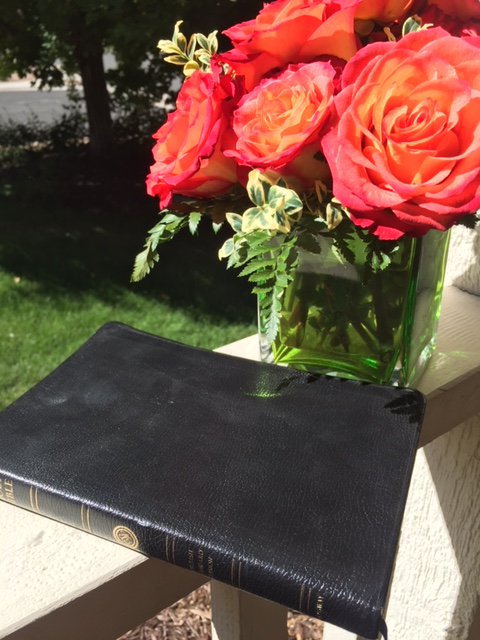
Let’s counter the overwhelming influence of worldliness by making our Bibles have more of a presence in our communities.  We’re all very aware of the moral decline in our nation, and the reason we’re so aware of it is because we see it everywhere we turn.  It’s on the news, radio, TV shows, talk shows, magazines, billboards, and internet.  What’s trending?  Worldliness.  All of these media outlets and various other avenues touting materialism, secularism, and godlessness can be discouraging.  Satan must be pleased.  He wants us to despair, to ask, “Where are the Christians?”  He wants us to throw our hands up and quit.  I think we can do something about that.  We can remind everyone that there are still many who want to serve God.  And we can do that by the very simple act of making our Bibles more visible.

Bibles are recognizable.  Everyone knows what they look like.  Outside of the church building, we don’t see them very often.  If we do, it’s notable.  The few times I’ve seen someone with their Bible on a plane or in an office, I think, “Hey, they’re holding a Bible!”  And it always makes me smile.  So what if we ALL carry our Bibles with us, in a very visible way, everywhere we go?  The next time we meet friends for lunch, we can call and ask each one to bring their Bible, and then just set them on the table.  The Bibles won’t go unnoticed.  If we’re shopping, the Bible can rest in the seat of the cart.  If we’re carpooling, we can display it in the dash.  If we’re at the gym, we can put in on the treadmill.  If we’re in the bleachers, we can set it right next to us.  Whether we’re working, playing, traveling, networking, or relaxing, we can look for ways to allow our Bibles to have a presence.  (This means it’ll have to be a traditional Bible, as the ones on our phones or other devices won’t be easily recognized by others.)  Even though such a simple act doesn’t involve extra time or money on our part, I think this kind of Bible-saturation can make an impact.

What’s the worst that can happen?  Someone might ridicule us.  Someone might be offended.  Someone might even ask us to put the Bible away.

What’s the potential for good?  At the very least, our Bibles will be noticed.  People around us will automatically know we are believers.  Other godly folks will be encouraged.  The nonstop message of immorality will be partially countered by the presence of Bible believers.  Others might start carrying their Bibles, too.  Who knows?  It might even become commonplace in your community to see Bibles out in public.  And one day, someone might even be interested in studying that Bible with you.

“You are the light of the world.  A city that is set on a hill cannot be hidden.  Nor do they light a lamp and put it under a basket, but on a lampstand, and it gives light to all who are in the house.  Let your light so shine before men, that they may see your good works and glorify your Father in heaven” (Matthew 5:14-16).

Prayer for Today:  May I never be ashamed of Your Word, O Lord.

Photo credit: westerntradition

Do I Know You?

I’ve been thinking about the great Bible class we had Sunday morning taught by Will Hanstein.  The discussion centered around the warning Jesus gives about not causing others to stumble (Luke 17:1,2).  Mr. Hanstein pointed out that our actions and words can influence whether or not others go to Heaven.  He then said that Jesus tells us in the very next verse how to keep from causing others to stumble:  “Be on your guard!  If your brother sins, rebuke him; and if he repents, forgive him” (Luke 17:3).   Mr. Hanstein challenged us to consider how we’re doing with this difficult command.  It occurred to me that there’s one significant thing that would make this command easier for all of us, and that is having genuine relationships.  If we really know each other, rebuking and forgiving are powerful and effective.  If we don’t really know each other, we risk abusing the very safeguard Jesus put in place for His “little ones.”

If I don’t really know you, I won’t care enough to rebuke you.  Why should I?  It’s none of my business how you choose to live your life.  Right?  We don’t feel this way at all when one we dearly love is in trouble spiritually.  It takes courage to confront someone who’s entangled in sin.  But if we care about them, we’re more willing to do it, no matter how painful.

If I don’t really know you, I might misjudge you.  I might feel the need to admonish you for something because I assigned motives that weren’t really there.  Yet when we know and care about others, we will give them the benefit of the doubt instead of assuming the worst.

If I don’t really know you, a rebuke from me may appear self-righteous rather than loving, no matter how valid.  If we hardly ever talk to someone, naturally they will not welcome any sudden interest in their spiritual welfare.

If I do know you, I will humbly rebuke you in a timely manner.  I won’t wait until it’s too late.  (As Mr. Hanstein pointed out, a rebuke is needed when someone is caught up in sin and not doing anything about it, not when someone is aware of their sin and trying to change.)  When we know and care about others, we won’t put off talking to them, lest they ask, “Why come to me now, after all this time?”

If I do know you, I will be eager to forgive.  Like the father of the prodigal son, we rush to welcome back with open arms those we care about.  If we don’t really know someone, we may not be as diligent in reassuring them of our joy and love.

Genuine relationships spell the difference in how we handle Luke 17:3.  It will keep us from abusing the command (being too eager to rebuke because we see the worst in others), and it will help us carry out the command (being motivated by love to humbly rebuke and forgive those who need it).  There may be Christian brothers and sisters who sit on the other side of the auditorium that we don’t know very well.  Let’s build genuine relationships so we can give (and receive) what Jesus put in place as safeguards for our souls.

Prayer for Today:  Help me, Lord, to care enough to get to know and love my Christian family.

Image credit goes to Michael Hite

God’s Will or Mine?

When it’s decision-making time, Christians want to please God.  We want our choices to reflect our submission to Christ and His will.  With some decisions, the choice is crystal clear.  If it’s sinful, we’ll prayerfully choose to avoid it.  If it’s loving, benevolent, evangelistic, we’ll hopefully choose to embrace it.  But what about those times when the choice isn’t so clear?  We can pray about it…and then what?  Wait for clarification?  Do you find yourself then looking around for clues or hints, and saying, “Oh, that must be a sign!”  How do we know if something that happens is really an open door, an answer to prayer, or if it’s simply perceived justification of what we ourselves want?  In other words, how do we know if it’s God’s will or our own personal will?  I believe that sometimes there will be more than one right choice if, when we decide one way or another, we serve God to the best of our ability wherever that choice leads us.  But sometimes a choice can be costly.  Looking back, we might see more clearly how our own decisions led to poor outcomes.  Only God is all-knowing, but thankfully He has given us some guidelines for making the best choices in life.

1.  STORE UP WISDOM

Solomon, who had everything, recognized the value of wisdom.  He said when you’re in a tough situation, wisdom is better than physical strength and weapons of war.  Wisdom is what delivers us from what comes against us (Ecclesiastes 9:13-18).  Michael Hite, Vice President and instructor at the Bear Valley Bible Institute of Denver, said that wisdom is “the ability to see earthly things through heavenly eyes.”  How do we gain that spiritual sight?  By studying God’s Word.  Instead of waiting until we’re unsure about something, we should be studying diligently and consistently all along.  Storing up God’s Word means we’re prepared and better equipped to choose wisely.  Notice what we can learn about this very idea in James 1:19-25.  This passage teaches that our attitude toward the Word determines whether or not we’ll produce the righteousness of God.  Do we accept what God has to say, or are we quick to argue?  Do we receive it?  Do we do it?  Do we continue in it?  If so, we will be blessed in what we do.

*Some other verses for personal study on wisdom and the Word include Job 12:12,13; Proverbs 1-4; 24:3-6; Col. 2:2,3; Heb. 4:12; James 1:2-8; 3:13-18.

2.  DISTRUST YOUR FEELINGS

How many poor decisions have been made because of our emotional state at the time?  I once read a quote that advised against making a big decision on a bad day.  Some emotions, like frustration, anger, and hurt, can skew our thinking.  “He who trusts in his own heart is a fool, but whoever walks wisely will be delivered” (Proverbs 28:26).  What seems like a good idea in the heat of the moment may seem foolish when all is resolved, and then we’ve only added more trouble.  We must learn patience in discouragement.  We must cultivate the kind of maturity that can recognize the difference between feelings and facts.  And we must practice will-power and self-discipline when tempted to act rashly.  “Whoever has no rule over his own spirit is like a city broken down, without wall” (Proverbs 25:28).  Making decisions without self-control equals vulnerability.  Feelings can be powerful, but that doesn’t make them right.  When experiencing the whirlwind of our emotions, we must stop, pray, study, and then decide how to act, if at all.

*Additional verses for study on the unreliability of feelings include Prov. 14:12-17; Jer. 17:9,10; Col. 3:15-17; 2 Pet. 1:5-9.

3.  CULTIVATE CONTENTMENT

Discontentment can be a deterrent to godly choices.  If we are the type to become easily bored or soon dissatisfied, we will find ourselves wanting to make another change, move on, switch out.  This can be especially dangerous in areas of marriage, jobs, ministry, and acts of service.  Discontentment causes us to focus on the flaws instead of the potential.  One preacher’s philosophy was “I’ll stay with a work only as long as I’m useful.”  Unfortunately, he based his level of usefulness on the amount of effort it took in local work.  If problems came along, or things got tough, he moved on.  Consequently, this preacher chose to move every couple of years, and sometimes in less time than that.     No relationship, work, congregation, leadership, or location is perfect.  Contentment will allow us to make choices and then stick with them as long as we possibly can.  “Not that I speak in regard to need, for I have learned in whatever state I am, to be content:  I know how to be abased, and I know how to abound.  Everywhere and in all things I have learned both to be full and to be hungry, both to abound and to suffer need.  I can do all things through Christ who strengthens me” (Philippians 4:11-13).  Contentment reflects a heart that focuses on God’s blessings and trusts Him with the rest.

*Some more verses about contentment and how to cultivate it are Psa. 37; 118:24; Ecc. 3:1-13; Isa. 26:3; 58:10,11; 2 Cor. 12:8-10; 1 Tim. 6:6-11; Heb. 13:5.

Based on these three suggestions, we can ask ourselves some questions when trying to determine whether a decision is God’s will or really our will.  Have I been studying in order to make a wise decision?  Am I emotional right now?  Do I need to wait until I calm down?  Am I anxious to choose something else because discontentment has caused me to want to move on?  If we prayerfully and honestly answer these questions, we’ll have better clarity in determining the right course.

Free Heart Check Quiz!

Answer a few questions, and you can learn all about yourself.  If you want to know what kind of personality you have, you can take a test and find out.  (I’m a Melancholy.)  There are quizzes that help you know what kind of colors you should wear.  (I’m a warm autumn.)  What kind of exercise best suits your body shape?  (Apparently I need every exercise in the book.)  There’s no end to the types of quizzes out there.  What breed of dog should you own?  What kind of spender are you?  Which career should you pursue?  With a few keystrokes, you can find out anything you want to know about yourself.

It takes a little more effort to really know yourself.  In Psalm 139, David begins by saying, “O Lord, You have searched me and known me” (v.1).  He ends the psalm by saying, “Search me, O God, and know my heart; Test me, and know my anxieties; And see if there is any wicked way in me” (v. 23,24).”  And in between those two verses, we see David acknowledging that God knows him better than anyone.  God knows everything he does and even thinks (v. 2).  God understands him, everything about him (v. 3).  God knows everything he says (v. 4).  God is with him at all times (v. 7-12).  God knows him from the inside out (v. 13-15).  God had plans for him in His book before he was even born (v. 16).  No wonder David asked God to test his heart, to help him know himself!  Am I up to taking that test?  It might look something like this:

Check the one that best describes you:

____A.  I use the Word as my mirror every day to see the areas I need to change in order to look more like Christ (James 1:22-25).

____B.  Many times I only use the Word when I’m preparing a lesson or trying to prove a point.

____A.  I listen to people older than me in hopes of learning from their knowledge and spiritual maturity (Prov. 12:15; Psa. 25:9).

____B.  I feel that older people are out of touch and can’t really relate, but I’m willing to tolerate them.

____A.  I can’t do enough to show my gratitude and love for my Heavenly Father so I eagerly serve Him with my whole heart (Psalm 119: 34,35).

____B.  If it’s not specifically mentioned in the Bible, I’m not doing it.  Why go out of my way to do something I really don’t have to?

____A.  I never want to cause anyone to stumble, so I’m careful about what I say and the choices I make.  Just because I CAN do something doesn’t mean I SHOULD (1 Cor. 10).

____B.  If I have the right to do something, I’m going to do it.  It’s not my fault there are ignorant Christians out there.

____A.  I build up the body of Christ by looking for ways to encourage others (Eph. 4:29).

____B.  I’m not afraid to criticize the works and efforts of others, or point out their flaws and weaknesses.  Somebody has to keep everyone else in line!

Your Results:  If you checked more A’s than B’s, congratulations!  Your heart is humbly trying to follow Christ’s example of compassion and commitment.  If you checked more B’s, it could be that pride is keeping you from seeing your own shortcomings (Gal. 6:1-5).

This is just one example of how we can learn about ourselves from the Bible.  If I want to know what kind of wife I am, how brightly I shine the Light, or my level of soul-winning efforts, I must be careful not to compare myself with others in order to feel satisfied or justified (Luke 18:9-14).  For a true gauge, I must humbly and honestly turn to the One who knows me better than anyone else.  I must be willing to put my heart to the test.  “For the word of God is living and powerful, and sharper than any two -edged sword, piercing even to the division of soul and spirit, and of joints and marrow, and is a discerner of the thoughts and intents of the heart” (Heb. 4:12).

Prayer for Today:  Search me, O God, and know my heart.  Test me, and see if there is any wicked way in me.

Photo credit goes to Angelo Storari

Live Brightly

At Higher Ground this year, Mandy Thomas started our day off one morning with a beautiful devotional thought.  Based on Matthew 5:16, she said our goal is to “live brightly.”  This phrase has stuck in my mind ever since.  I am thankful for the many in my life who shine consistently.

Some shine by smiling.  Such a simple thing, really, but what an impact!  I have to remind myself that my face doesn’t naturally fall into a joyful expression.  Instead, it looks rather annoyed, or “long,” as someone recently pointed out.  But I know many who are smiling every time I see them.  It lifts me up, and makes me want to smile in return.  I imagine all who come in contact with them are blessed, simply because the joy in their heart is reflected on their face (Phil. 4:4; Psa. 16:9; Prov. 10:28).   I can smile more.  Surely I can do that.

Some shine by having a positive outlook.   Their life isn’t easy, but you wouldn’t know it from their words.  They talk (and post) about the good in life, and the Source of their blessings.  They keep looking up.  Their trust in God permeates their attitude and demeanor.  Because of their serenity, others are drawn to them, and want to know the secret to their peaceful confidence.  How are they living brightly?  Their lack of pessimism and complaint stands out, and points the way to Christ (Phil. 2:14; 4:11).  If being optimistic helps others see Jesus, what does my grumbling do?  I need to remember that.

Some shine by encouraging others to see the Word.  Their posts contain Scripture.  They turn their life experiences into  teaching opportunities.  They remind us why we’re here, what the Bible has to say, and how we can make it real.  With all of the worldly messages swirling around us, I am especially grateful for those who combat it with glimpses into the eternal, hope-giving Word.  We can never get enough of that.  They shine by turning simple, daily rituals into opportunities to plant the Seed (Mark 16:15; Psa. 96:3; Rom. 1:16).   What if each day I look for at least one way to share the Word.  Will it make a difference?  Oh yes.  God’s Word is living and powerful (Heb. 4:12).  All I have to do is remember to help others see it.

Looking at how others are living brightly, I notice that none of the three ways I’ve mentioned involve money or a great deal of time.  There’s no fear of embarrassment or persecution, usually.   They’re just letting God’s love shine through them.  And I’ve been blessed because of it.

Prayer for Today:  Thank you, Lord, for those who spread Your love by reflecting Your Son.  

Mandy Thomas & Monique Martin (photo credit: Mandy Thomas)

He Sees All My Tears

I don’t think loneliness is restricted to times when we’re by ourselves.  Have you ever felt all alone while in a crowd full of people?  Loneliness can hit us when we feel like no one understands, no one gets it.  Hopefully Christians experience very few moments of loneliness, since we’re blessed with a church family that offers genuine love and support.  But for those times when we shed tears alone because we feel we can’t share them with anyone, we can remember a couple of comforting Scriptures.  “You number my wanderings.  Put my tears into Your bottle; are they not in Your book?” (Psalm 56:8).  Then there’s all of Psalm 139, which assures us that no matter where we are or what we’re doing, God knows our thoughts, and is always with us, even in our darkest moments.  No teardrop slips away unnoticed by our God.

He sees my tears of regret.  If I’ve sinned and the consequences are great, God sees my tears of self-loathing and remorse.  If I look back over my life and see missed opportunities, or a neglected family, God sees those tears of loss and regret, too.  God knows every time I think, “I wish I had…” or “If only I hadn’t…”  He sees my tears of regret.  And when I turn to Him in those times, I see His mercy (Ephesians 2:4,5) and His grace (Ephesians 2:8-10).

He sees my tears of frustration.  When I try and try, but nothing seems to be working out right, God sees my fretful tears of dismay.  When I’m feeling sorry for myself or stressed out, He sees my tears of resentment.  He sees my tears of frustration, but if I’ll turn to Him in those times, I’ll see His patience (Psalm 86:15) and His steadfast goodness(James 1:17).

He sees my tears of discouragement.  When I keep failing to reach my spiritual goals, God sees my tears of weakness.  When a loved one disappoints me or betrays me, God sees my tears of pain and anger.  And whenever I feel like giving up, God sees my bleak tears of despondency.  He sees every tear of discouragement, but when I turn to Him, I see His promises (Psalm 119:147-150).

As God comforted in the days of old, so He comforts today, “I have heard your prayers.  I have seen your tears” (2 Kings 20:5).

Prayer for Today:  Thank you, Lord, for caring.  Thank you for your patience and your love.

Overkill

I asked my youngest son Carl to replace a light switch plate in his bedroom with the new one.  A couple of minutes later I heard him revving the DeWalt cordless drill.  I rolled my eyes and thought, “Any excuse to use a power tool…”  A regular screwdriver would’ve been the best choice for such a simple task.  Besides, if you don’t know how to use a power tool properly, you could do some damage.  Talk about overkill!

There are many situations in which it’s possible for us to be guilty of overkill.  Mainly, let’s give some thought to how we react to others.  Do we feel the need to make some noise?  Is that really more effective?  Or are there times when a quieter approach is more appropriate?  Just because we own power tools doesn’t mean every situation calls for them.  Consider some examples:

With our children.  When we’re admonishing, we don’t have to raise our voice to show significance.  “If I yell at them, they’ll know I really mean it!”  If we have to shout before they know we’re serious, it’s because we’ve conditioned them that way.  There are times when shouting (the power tool) is appropriate, such as stopping a child from running out into the street, but most of the time a raised voice does more harm than good.  We can discipline without yelling.  We can still be strict and serious without intimidating our children or losing our temper.  Patience, gentleness, and self-control demonstrate the fruit of the spirit (Galatians 5:22,23).  What are we demonstrating when we’re quick to shout?

With our spouse.  Shouting matches behind closed doors are often the result of misunderstandings.  When we assume that our spouse knows what we want or understands the way we think, we feel hurt or angry when hopes aren’t realized or something is handled unexpectedly.  Then we take it personally.  Discussions escalate, and doors are slammed to punctuate.  This kind of ugly damage can be avoided.  It’s not fair to expect your mate to read your mind, and then let them know you’re frustrated when they don’t measure up.  Talk, discuss, share.  And when a disappointment still comes, talk through it again.  Danger hovers close to heated arguments because we know our spouses’ vulnerabilities.  We know how to hurt them.  We can communicate effectively without threatening or insulting.  Quietness doesn’t signify a lack of passion.  It means we want to love like Christ loves (Ephesians 5:22-28).

With our brethren.  Upon seeing a weakness or shortcoming in a brother, some are too eager to make some noise.  Condemnations are spouted on facebook, but to what end?  If the goal is to help, encourage, or restore, wouldn’t a simple, quiet one-on-one approach be more effective?  Upon seeing imperfections in a preaching school or Christian college, wouldn’t a direct conversation with the administration be adequate instead of publicly writing off all such institutions?  And instead of slamming the Lord’s church for all the world to see/ read/ hear, wouldn’t it be better to demonstrate a Christ-like life to show the world the beautiful nature of God’s Family?  When we’re quick to condemn, we do more harm than good.  Looking for ways to lovingly make a difference doesn’t mean we tolerate sin.  It means we’re humbly bearing with one another in love (Ephesians 4:2).

It didn’t take long for Carl to let me know the job was done.  He even revved the drill a couple more times to emphasize his manliness.  I laughed at that.  But it’s no laughing matter when we overreact to our families, and to God’s Family.

Prayer for Today:  Thank you for your Son, who showed us how to love and live with patience and humility.

IMG_20130715_130237_452

Paula Deen and Same Sex Rights

These are the two big news items this morning.  Notice the approach to each of them.  Paula Deen was interviewed on the Today Show.  She tearfully begged anyone who has never committed a sin to cast the first stone.  So far the reaction has been one of outrage that she didn’t apologize for her offensive remarks, but seemed more concerned with defending herself.  What was the reaction concerning the Supreme Court ruling on same sex marriage?  Words like “victory,” “boost,” and “celebration” are being used.  We’ve been told this is a historic decision for America, and have already been reminded of the Gay Pride parade that will take place in San Francisco this weekend.

Is the media trying to lead viewers in moral matters?  We’re being told which sins are socially acceptable and which ones aren’t.  Paula Deen said some things that were wrong.  She’s been fired by Food Network, but the media is still demanding an apology.  People are outraged and speaking out against her for what she did.  Well, she should be held accountable.  The words we use matter, and we’re all going to give an account for everything we say (Matthew 12:36).  But there are other sins that can be committed by mouth.  Why is it okay for public figures to use curse words or take God’s name in vain?  And why wasn’t the same outrage displayed when the sin of homosexuality was publicly declared and embraced?

We don’t get to choose which sins can be tolerated and which ones can’t.  Even more basic, we don’t get to choose which practices are sinful.  God has already done that in His Word.  Our speech is to be pure (Ephesians 4:29), but our sexual activities are to be pure as well (1 Corinthians 6:9,10; Ephesians 5:3).  Trouble is in store for those who accept or tolerate what God calls sin.  “Woe to those who call evil good  and good evil…who are wise in their own eyes and prudent in their own sight” (Isaiah 5:20-22).  May the Word only guide us in determining what is right and what is wrong.

Prayer for Today:  May we shine the Light ever brighter in our confused nation as we seek to glorify You.

Photo copied from HollywoodLife.com