A Perspective Shift

By Kathy Pollard

I had two major projects in mind for our fair-weather, mostly-free weekend. One was outside, one was inside, and both required help from my strong husband. Instead I ended up taking him to Urgent Care on Friday and he spent the weekend on antibiotics and pain meds with his left leg elevated. I felt bad for him but also felt sorry for myself for my foiled plans.

On top of that, our 11-year-old Westipoo started having nighttime anxiety. I felt bad for him but also felt sorry for me because all that shaking and panting is interfering with decent sleep.

Grumble, grumble.

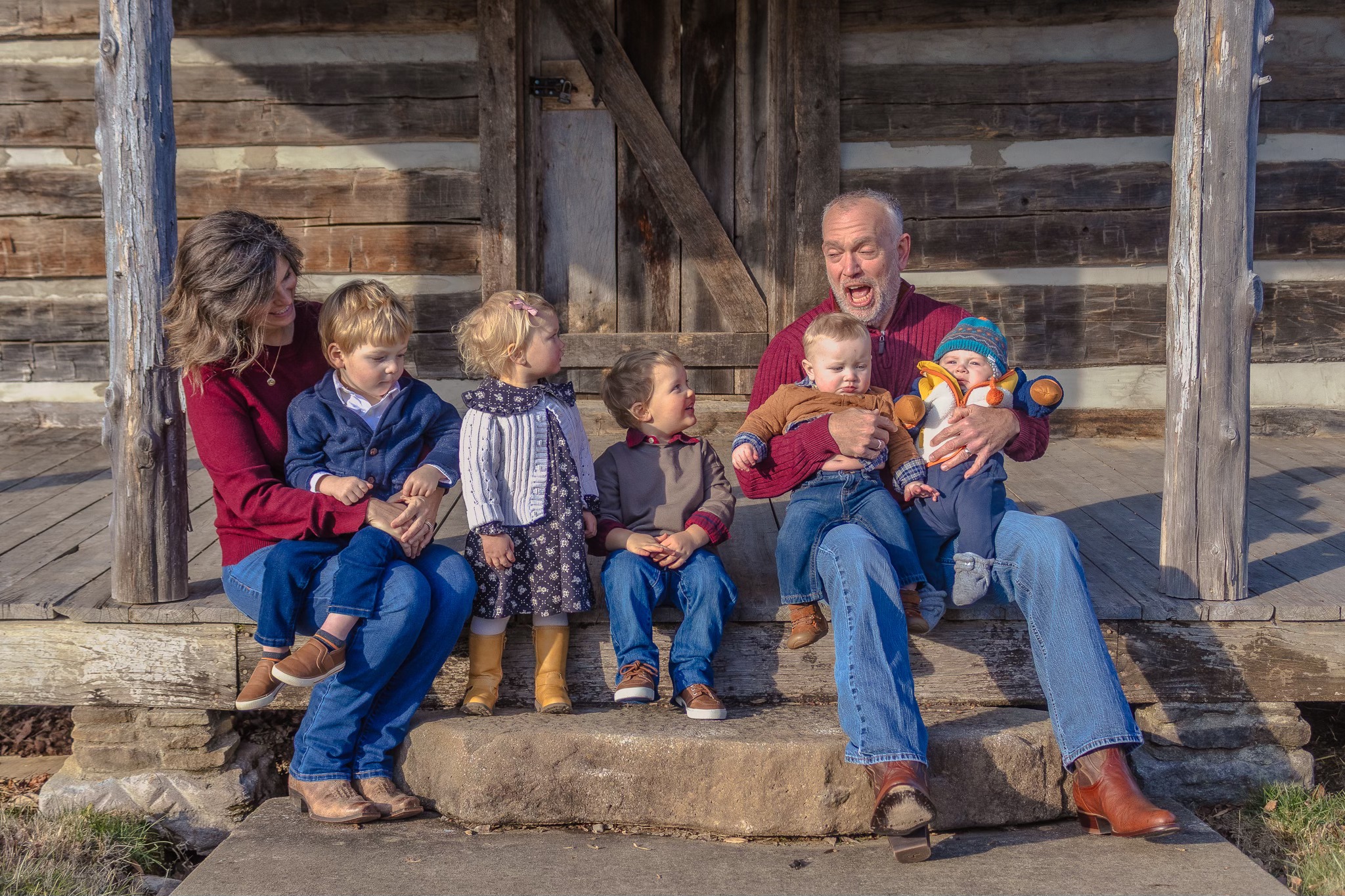
Then as I was in the kitchen Saturday night, I heard Neal gasp in the living room. I ran in there to find him looking at his phone and saying, “Oh no! Oh no!” I was so afraid to ask, “What happened?!” Our 3-year-old grandson got ahold of something toxic and was being medevaced to Vanderbilt.

I know it’s happened to you, too. You head into your weekend with plans but they’re upended. You wring your hands about something trifling only to have a real crisis come along and make you feel silly for ever giving the trifle a thought.

It’s the unexpected, horrible, fearful moments that sharpen my focus. I HATE them but apparently I still need them. Who cares about my neglected projects?! Neither of them were important. What’s the big deal about a few nights of fitful sleep? Many people lose sleep for far more serious reasons. I felt ashamed for complaining. I felt grateful for life, family, and answered prayers.

Last night in worship we sang, “All my life He has been faithful. All my life He has been so, so good. With every breath that I am able I will sing of the goodness of God.” I couldn’t even finish the song as the words hit me square in the heart and tears coursed down my cheeks.

I hope I’ll remember the lesson a little longer this time. When I was sulking, God knew what was coming. And in the middle of the 24-hour window of panic and pleading, I was reminded me of His grace and patience. I saw God’s tender care in the prayers and hugs from our church family. I saw the strength and faith of my son and daughter-in-law as their little boy struggled all night. I saw the selflessness of friends and family as they jumped in to watch the other children, feed their animals, and fill a pulpit.

When I awoke this morning, I didn’t give a single thought to unfinished projects. I thanked God that our grandson is going to be okay. I didn’t lose a weekend, I gained a better perspective.

“For you, O Lord, are good and forgiving, abounding in steadfast love to all who call upon You.”

(Psalm 86:5)

If you enjoy real mail, join our monthly snail mail club for Christian women: https://www.lifeandfavor.org/

Check out our Christian living books and bookish items: https://www.lifeandfavor.org/

Never Tear Down

By Kathy Pollard

The book of Nehemiah opens with an emotional scene. Having heard the disturbing news about the broken wall and burned gates of Jerusalem, Nehemiah sat down and wept. He mourned for days, fasted, and prayed (Nehemiah 1:3-4). As cupbearer to Artaxerxes, Nehemiah was not allowed to display his emotions. He was supposed to maintain a stoic composure while serving the Babylonian king. That is why he was “very much afraid” when the king said, “Why is your face sad, seeing you are not sick? This is nothing but sadness of the heart” (2:2). He must have been surprised and relieved when Artaxerxes offered to help him instead of punishing him. Nehemiah got permission to go to Judah and he immediately encouraged the people, “Come, and let us build up the wall of Jerusalem.” They responded to his passionate plea by saying, “Let us rise up and build,” and they “strengthened their hands for this good work” (2:17-18). Unfortunately, the very next verse introduces some troublemakers.  As soon as Sanballat, Tobiah, and Geshem heard the news about the rebuilding of the wall, they made it their mission to discourage the work (2:19). Through a series of scheming attacks, these three men kept Nehemiah on his knees in prayer for protection.  

Thankfully we would never attack God’s people with such vicious intention, nor would we make it our mission to tear down. But while we cannot imagine ourselves being seen as “adversaries” (4:15) of God’s people, I’m afraid there are times when our own attitudes or actions do in fact discourage the work. In the book of Nehemiah, we can easily identify the bad guys.  They are hateful and easy to dislike. But I wonder how they viewed themselves? They were men of position and importance. They thought the work of the Jews was in direct rebellion against the king (2:19).  They were wrong but they were acting on their own agenda. Perhaps there are times when we become so agenda-driven that we lose sight of the real mission (Mark 16:15). We can become the ones actually tearing down the good work. How sad when others can easily see the harm we are doing! To make sure we are not guilty of it or blind to it, let’s remember how Nehemiah’s naysayers behaved.

THEY WERE LED BY THEIR EMOTIONS

When Sanballat heard about the building of the wall, he was “angry and greatly enraged” (4:1). When Sanballat, Tobias, and others heard about the good progress being made, they were “very angry” (4:7) and upset enough to want to do harm (6:2). These men seemed to be reactionary. As soon as they heard something they didn’t like, they became furious and were quick to do something about it.

How often have we been guilty of the same thing? Many of our regrets are probably over things we said or did in the “heat of the moment.” Emotions like anger, fear, disappointment, jealousy, and even discouragement can lead us to say or do harmful things if not kept in check. “He that hath no rule over his own spirit is like a city that is broken down, and without walls” (Proverbs 25:28). Walls are for a city’s protection. Without them, a city is vulnerable to attacks. That’s part of the reason why Nehemiah was so distraught when he learned of the condition of the walls of Jerusalem. When we lack self-control, we leave ourselves more vulnerable to the enemy. Satan can use us as his tools and for his purposes when we aren’t thinking clearly. The fruit of the Spirit includes self-control (Galatians 5:22-23). When we do not practice self-control we are more likely to walk in the flesh, which includes “biting and devouring one another,” anger, and strife (Galatians 5:15-21).  

Build up instead. To safeguard against being reactionary, we must remember that the heart cannot always be trusted (Proverbs 28:26; Jeremiah 17:9). If there’s something we disagree with or don’t like, we must first look into the mirror of God’s Word for guidance (James 1:23-25). Then we will give the benefit of the doubt, practice patience, offer compassion, and always, always keep the big picture in mind, which is the building up of the kingdom (Ephesians 4:1-16).   

THEY TARGETED THE LEADERSHIP

When Nehemiah first heard about the problem, he chose to do something about it. He was the one who motivated everyone else to rebuild the wall.  He rolled up his sleeves and got to work. The troublemakers knew this and so they began to mock and ridicule him in the presence of others (2:19). Then they sent a message directly to Nehemiah (6:2).  

It is easy to be an “arm chair quarterback” in the church. Some are quick to question the leadership when they don’t like a decision that’s been made. They criticize the elders in conversations with others. Instead of being a part of the solution, they take the wind out of the sails of those who care enough to get their hands dirty and work. We must be very careful to not discourage church leaders. God has put them in that position (Titus 1:5) and commanded us to “esteem them very highly in love for their work’s sake” (1 Thessalonians 5:12-13). Nehemiah ended up feeling despised (4:4). May we never be guilty of causing the same feelings in our own good leaders!

Build up instead. Imagine how much stronger a church can be when her shepherds are encouraged, loved, and supported! We can tell the elders we’re praying for them, that we appreciate their sacrifice and labor of love (1 Timothy 5:17). We can freely offer our own services to help fill the gaps in local work.  We can build them up in the presence of others.  We can protect them by refusing to listen to harsh criticisms against them (1 Timothy 5:19). We can do our part to create a culture that respects authority in our own congregations. Everyone wins when the leaders are lifted up!

THEY USED THEIR WORDS AS WEAPONS

Sanballat, Tobiah, and Geshem began mocking Nehemiah and his fellow workers (2:20). Then they mocked all the Jews, calling them “feeble” (4:2). They tried to make the Jews feel inadequate. They tried to make them doubt their ability to build. “Will they restore it for themselves? Will they revive the stones out of the heaps of rubbish, and burned ones at that?” (4:2). Tobiah wanted them to feel like their work was worthless. He said, “Yes, what they are building–if a fox goes up on it he will break down their stone wall!” (4:3).

Perhaps the quickest way to tear down others is with our words.  “Death and life are in the power of the tongue” (Proverbs 18:21).  We can damage our marriages with hurtful words because we know where our spouse’s vulnerabilities lie. Whether we truly intended to or not, we can discourage good workers in the kingdom by causing them to question their own abilities. In this age of social media, it’s especially easy to wreak havoc.  We can harm reputations by labeling others.  We can post just enough to cause people to wonder about the soundness of certain individuals. Instead of having a loving conversation in private when there is a differing view or opinion, some have used every opportunity to ridicule a brother in a public manner. Condescension, insults, and sarcasm are used by those who have no problem with discouraging others.  

Build up instead. Surely the quickest and easiest way is with life-giving words. We can be more intentional about lacing our speech with grace (Colossians 4:6). We can make sure we only say things that will build others up and “minister grace unto the hearers” (Ephesians 4:29). We can accomplish so much good with sincere words of encouragement.  

THEY ATTEMPTED TO GET OTHERS ON THEIR SIDE

When Sanballat mocked the Jews, he “spoke before his brethren and the army of Samaria” (4:2). When they later heard of the progress being made, Sanballat and others “conspired all of them together, to come and to fight against Jerusalem, and to hinder it” (4:8). This got so bad that Nehemiah had to set up round the clock guards while they tried to continue building the wall (4:9).  Sanballat knew there was strength in numbers.  

We may try to defend, validate, or strengthen our position by looping others in on it.  We can create strife in the Lord’s church by complaining to others about a certain brother or leader. We can hurt our own marriages by trying to gain sympathy from best friends or parents when our spouse upsets us. We feel bigger and “righter” when we pull more people over to our side.

Build up instead. God wants His people to promote peace and unity (Ephesians 4:3). If we have a problem with someone, our options are to let it go (Proverbs 19:11) or go to that person in private (Matthew 18:15). We can make sure all of our actions will promote healing in the church body instead of strife.

THEY USED FEAR TACTICS

The fear felt by God’s people was visible (4:14). This must have been the method that Sanballat and his gang thought would be most effective.  Through some scheming and deception, they hoped fear would lead to discouragement which would paralyze the work. They even accused God’s people of things that weren’t true concerning their motives and agenda (6:6-7). Nehemiah recognized it for what it was (6:9).

Even the Lord’s church has her share of tormentors. Anyone who glories in “beating down” another person with powerful arguments or fierce demeanor, who boasts of their own verbal victories, who uses veiled threats or intimidation has become nothing less than a bully.

Build up instead. The “spirit of fear” does not come from God (2 Timothy 1:7). We can do the same thing Nehemiah did to help God’s people get past it. He reminded them to keep their eyes on God instead of the adversaries (4:14, 20). He had the people working side by side while they were building the wall (chapter 3). He spent much time in prayer on their behalf. If we spend our time and energy doing these same three things, we can be sure that we are being an advocate instead of an adversary.

Perhaps the greatest motivation to never tear down is what ultimately happened in the book of Nehemiah. Sanballat, Tobiah, and Geshem were foiled by God. God “frustrated their plan” (4:15). How satisfying to read how the naysayers reacted when the wall was completed! “And when all our enemies heard of it…[they] fell greatly in their own esteem, for they perceived that this work had been accomplished with the help of our God” (6:16). The NASV reads, “They lost their confidence.” What happened to their bravado?

God promised to build a kingdom that would never be destroyed, and He did (Daniel 2:44; Matthew 16:18).  He is going to protect her from anyone trying to tear her down. God help us see and remove any destructive ways in ourselves.  

Resources for you!

If you love getting real mail, join A Tiny Spark, a snail mail club for Christian women!
Check out our books and bookish items.


#43- Growth Reports

52 Reasons to Love the Church

By Kathy Pollard

We’re currently studying the book of Acts in our Sunday morning Bible class. Chris Young is doing a great job teaching and he recently pointed out that there are multiple “growth reports” throughout the book. That sent me on a little quest to find them all, and just reading them one after the other was thrilling!

  • Acts 2:41- “So those who received his word were baptized, and there were added that day about three thousand souls.”
  • Acts 4:4- “But many of those who had heard the word believed, and the number of the men came to about five thousand.”
  • Acts 5:14- “And more than ever believers were added to the Lord, multitudes of both men and women.”
  • Acts 6:1- “Now is these days when the disciples were increasing in number…”
  • Acts 6:7- “And the word of God continued to increase, and the number of disciples multiplied greatly in Jerusalem, and a great many of the priests became obedient to the faith.”
  • Acts 14:1- “Now in Iconium they entered together into the Jewish synagogue and spoke in such a way that a great number of Jews and Greeks believed.”
  • Acts 14:21-22- “When they had preached the gospel to that city and had made many disciples, they returned to Lystra and Iconium and to Antioch, strengthening the souls of the disciples, encouraging them to continue in the faith.”
  • Acts 16:5- “So the churches were strengthened in the faith, and they increased in numbers daily.”
  • Acts 17:3-4- “Explaining and proving that it was necessary for the Christ to suffer and to rise from the dead, and saying, ‘This Jesus, whom I proclaim to you is the Christ.’ And some of them were persuaded and joined Paul and Silas, as did a great many of the devout Greeks and not a few of the leading women.”
  • Acts 17:12- “Many of them therefore believed, with not a few Greek women of high standing as well as men.”
  • Acts 17:34- “But some men joined him and believed, among whom also were Dionysius the Areopagite and a woman named Damaris and others with them.”
  • Acts 18:8- “Crispus, the ruler of the synagogue, believed in the Lord, together with his entire household. And many of the Corinthians hearing Paul believed and were baptized.”

These growth reports are exciting (and I probably missed some), but what’s even more exciting is the fact that it’s all still going on!

People still care. Peter, Stephen, Paul…these men and others cared more about the gospel than they did about their own personal safety. They were courageous enough to tell others about Jesus. They prayed for boldness and then acted on it (Acts 4:1-3, 13,29). Still today there are men and women who love souls enough to share the Truth with them. I could name names and I know you could, too.

People are still receptive. Think of conversions like Paul and Crispus. They were both ‘all in’ with what they already believed and practiced, yet their hearts were open and they became disciples of Christ. Amazing! 2000 years later we are still hearing “growth reports” because people are still searching. I could share recent conversion stories that are surprising because of the person’s religious background or current occupation and I know you could, too.

The Word of God is still powerful. God chose His disciples to be the conduit for getting the saving message to the world. They were imperfect humans but that didn’t matter because they only had to “speak the word of God” (Acts 4:31). The power is in the Word and that’s why conversion and transformation take place (Heb. 4:12). There’s nothing like the aha moment when the Truth is shared with someone who hears or understands it for the first time. It’s amazing to watch the Word go to work on tender hearts. I could share stories and I know you could, too.

Rejoice in the growth reports!

The book of Acts appropriately closes with these words:

“Proclaiming the kingdom of God and teaching about the Lord Jesus Christ with all boldness and without hindrance.”

(Acts 28:31)

#42-The Bible is the Emphasis

52 Reasons to Love the Church

By Kathy Pollard

To paraphrase a quote I ran across recently, if you want a Bible church, then you must read the Bible, preach the Bible, and teach the Bible. It makes sense that the Lord’s church would emphasize His Word (John 12:48). The Bible really does underlay every area of the church, as God intended:

  • Bible classes. How wonderful to come together a couple of times a week for the sole purpose of Bible study! All ages have opportunities to grow their knowledge (2 Pet. 3:18).
  • Sermons. Every Sunday morning and Sunday night, the gospel is proclaimed in worship (Rom. 10:15). Bible-centered preaching exhorts and convicts (2 Tim. 4:2)!
  • Devotionals. These happen all the time (before class on Wednesday night, during youth activities, etc.) and help us keep our minds on things above (Col. 3:1-2).
  • Vacation Bible School, Bible camps, Bible Bowls, Lads to Leaders and more. I couldn’t begin to name all the annual events and programs that are for the sole purpose of growing the faith of our youth in fun, engaging ways.
  • Church leadership, acts of worship, plan of salvation, discipleship…Every aspect of the organization of the church and life therein is based on the pattern and commands found in God’s Word (1 Cor. 3:11).

This habit of continually referring to the Bible trains us to discern between truth and error (1 Tim. 2:4). Following the pattern of the Word keeps Jesus (and not men) in His rightful role as Head of the church (Eph. 1:22-23). Emphasizing the Bible is good and right and essential.

Thank God for Bible-based churches!

“I am writing these things to you so that...you may know how one ought to behave in the household of God, which is the church of the living God, a pillar and buttress of the truth.”

(1 Tim. 3:14-15)

“Continue in what you have learned and have firmly believed, knowing from whom you learned it and how from childhood you have been acquainted with the sacred writings, which are able to make you wise in salvation through faith in Christ Jesus.”

(2 Tim. 3:14-15)

Revive Me #18–Keep Things in Perspective

A few months ago I shared the photo below on my husband and dog on social media.  Several posted comments like:

“That’s not a dog…it’s a grizzly bear!”

“That dog is huge!  What kind is it?”

“That can’t be a real dog.”

“That’s a wookie.”

“Is that real?  When’d he get so big?  (Your dog, not Neal)”

Chipper does look ginormous in the picture but he’s only a medium sized goldendoodle and weighs about 55 pounds.  Something about the perspective of the shot makes him look a lot bigger than he actually is, especially compared to Neal.

How are you at keeping things in perspective?  It’s easier to see when someone else has trouble because they’re approaching something from the wrong point of view.  We might think, “If only they would change their attitude concerning ______…”  It’s more difficult to recognize in our own life.

Thankfully the Bible is our mirror (James 1:23).  We can look into it and see if we need to make any changes.

  • What causes you to worry?
  • Do you have unresolved issues with someone?
  • Do you wonder what you’re supposed to do with your life?
  • Do you feel like you’re not good enough, your past is insurmountable, or Christianity is too hard?

Satan wants you to struggle and doubt.  He wants to discourage you from ever “getting it right.”  These types of questions can be more easily resolved when approached from a biblical perspective.  When we keep our focus where it belongs, the predicaments of life don’t loom as large.

“Therefore, if you have been raised up with Christ, keep seeking the things above…Set your mind on the things above, not on the things that are on earth.”

(Col. 3:1,2)

Suggestions for the Week:

  1.  Study verses that have to do with spiritual priorities:  Luke 12:22-34; Col. 1:10; Matt. 6:19-24, 33; 22:37,38; Luke 10:38-42; Rom. 12:2; Phil. 3:13,14; 2 Tim. 2:22
  2.  List your concerns and pray about them.  Ask God to help you keep things in their proper perspective.
  3.  Consider the quote, “Fear makes the wolf bigger than he is.”  Have you allowed fear to control your decisions?  How can you strengthen your faith to help you see things God’s way?

Read it. Memorize it. Live it.

11232895_10207670788185882_5745982802875932984_o